Best Luxury Landscaping for Beachfront Properties: Master Coastal Guide
Coastal residential site planning and maritime landscape architecture operate under extreme environmental, chemical, and geotechnical parameters. Consequently, these factors separate luxury coastal property development from standard inland horticulture. When estate owners and coastal developers commission high-end grounds across volatile shorelines, design requires careful coordination. Specifically, it involves harmonizing dune preservation ecology, salt-spray aerodynamics, marine-grade structural engineering, and tidal hydrology. Furthermore, this level of master planning shifts the core objective away from decorative seasonal planting. Instead, it focuses on resilient coastal stabilization, wind-shear deflection, and long-term asset survival across decades of volatile weather.
Developing comprehensive coastal layouts necessitates a rigorous understanding of environmental forces. For instance, designers must analyze how airborne sodium ions, wind-driven sand abrasion, and storm-surge dynamics interact with soil biology and stone masonry. A truly successful coastal landscape design does not merely plant ornamental palms up to the high-tide line. Therefore, professionals calculate dynamic dune migration patterns, choreograph sub-surface freshwater irrigation grids, and balance salt-tolerant species selection against microclimatic exposure zones. Consequently, the primary goal is establishing a balanced relationship between luxury living spaces and fragile coastal ecosystems without compromising storm resilience.
Approaching this discipline requires examining the underlying mechanics that separate superficial beachfront planting from structural coastal mastery. Furthermore, the following analysis explores conceptual frameworks, maritime botanical variations, economic resource dynamics, and maintenance paradigms that define sophisticated coastal environments. When property developers and landscape curators evaluate high-end coastal estates, mastering the implementation of the best luxury landscaping for beachfront properties ensures structural longevity, spatial harmony, and financial alignment over time.
Understanding “best luxury landscaping for beachfront properties”
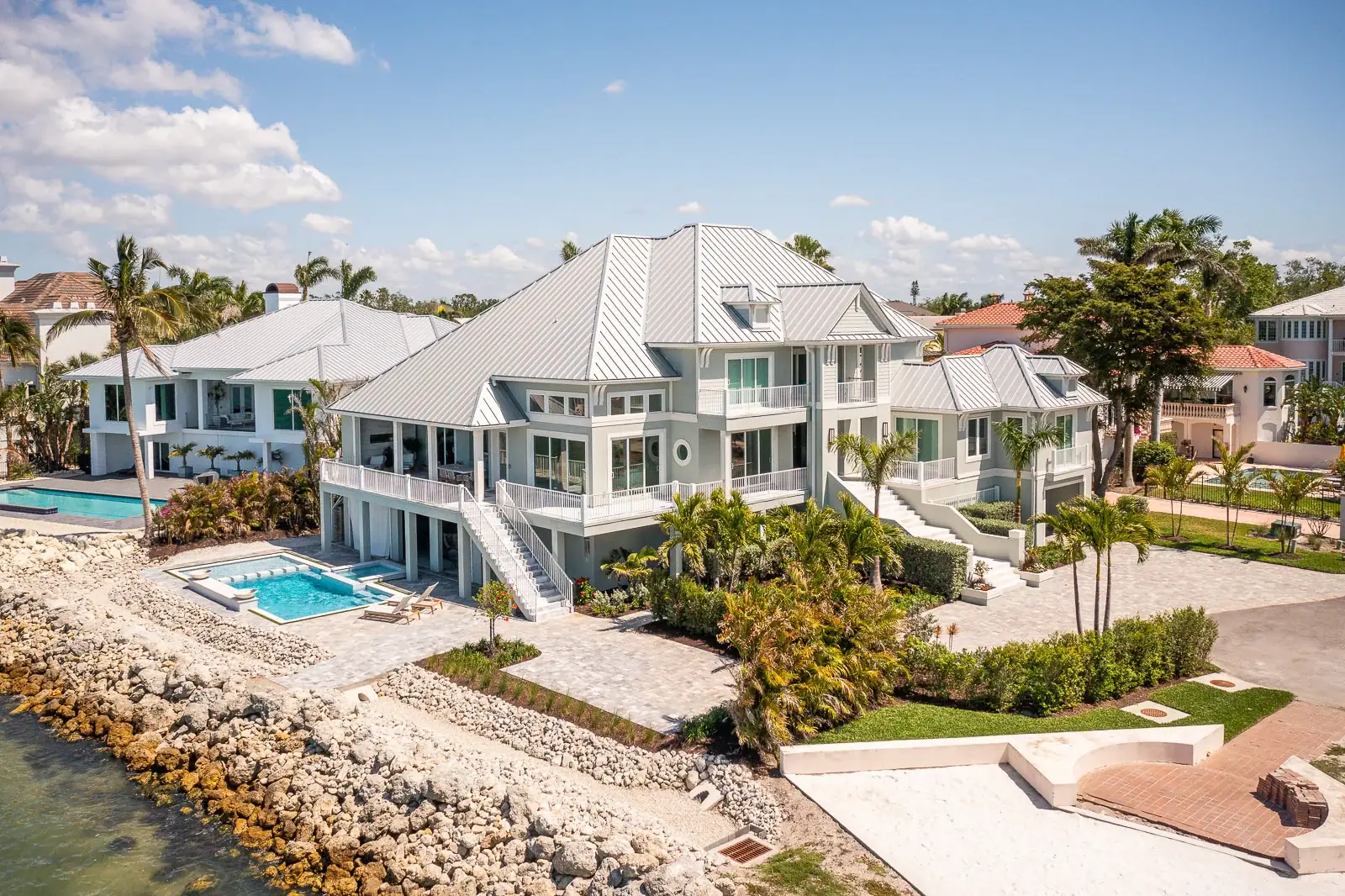
The process to execute the best luxury landscaping for beachfront properties requires looking far beyond initial aesthetic plant arrangements and surface patio stones. Specifically, landscape planners must analyze salt aerosol deposition rates, sandy soil nutrient leaching, and dynamic dune stabilization regulations. Additionally, they must factor in long-term marine-grade hardware corrosion costs. These distinct architectural blueprints are engineered to complement primary coastal manors. However, they must simultaneously solve complex site challenges, such as severe storm surges, shifting sand dunes, and strict environmental agency zoning laws.
A common misunderstanding in coastal landscape development involves the conflation of tropical aesthetic lushness with maritime environmental resilience. Property owners frequently assume that importing delicate inland plants and installing traditional sprinkler systems automatically constitutes a robust luxury master plan. In practice, true coastal landscape mastery is found in sub-grade freshwater lens management and wind-buffering structural planting tiers. Furthermore, success relies on salt-resistant botanical selection and long-term structural resilience under hurricane-force weather.
Oversimplification risks occur when project evaluations focus strictly on immediate visual impact rather than foundational coastal engineering and soil microbiology. For example, an intricate lawn and delicate garden layout built over unamended beach sand without wind-screening will inevitably suffer from salt burn and sand-blasting dieback during the first major autumn gale. Furthermore, treating a beachfront boundary as a static land border ignores hydrodynamic reality. Coastal erosion, rising sea levels, and shifting sand volumes constantly alter the property perimeter. Therefore, the most effective evaluations account for ecological dynamics and structural maintenance requirements, ensuring the landscape retains its structural integrity as the shoreline evolves over time.
Deep Contextual Background
The evolution of coastal landscape design reflects shifting architectural philosophies, marine engineering capabilities, and cultural attitudes toward human interaction with fragile shorelines over centuries. Historically, beachfront construction was restricted by primitive structural engineering, making permanent coastal habitation precarious and landscape intervention minimal. Furthermore, early coastal settlement often involved destructive clearing of native dune vegetation, leading to severe erosion and property loss during major storm events.
During the mid-twentieth and early twenty-first centuries, the rise of coastal geomorphology and environmental protection legislation transformed maritime planning. Consequently, landscape architects transitioned toward resilient native dune restoration, salt-tolerant structural windbreaks, and engineered bulkheads that could withstand severe marine exposure. This historical trajectory established the foundation for modern coastal site planning, where advanced sub-surface drip irrigation, computerized weather monitoring, and sophisticated soil stabilization coexist.
Today, contemporary master coastal design incorporates laser-graded dune contours, automated freshwater desalinization irrigation, disease-resistant coastal cultivars, and marine-grade stainless steel structural supports. This historical evolution shifts the designer’s role from a simple gardener to an environmental coastal director. Ultimately, they integrate marine biology, geotechnical engineering, and architecture into a unified, sustainable property plan.
Conceptual Frameworks and Mental Models
Navigating the complexities of large-scale beachfront landscaping requires structured mental models that balance marine ecology, fluid physics, and spatial psychology.
-
The Coastal Wind-Shear Tiering Framework: This framework treats the landscape as an aerodynamic deflection shield. Additionally, it sequences low prostrate dune grasses, wind-sheared medium shrubs, and deep-rooted canopy trees into a stepped profile designed to force salt-laden wind over the primary residence.
-
The Salt Aerosol Deposition Model: This evaluates how ocean spray and wind-borne sodium ions travel inland across the property. Consequently, it models the critical need for physical barriers, leaf cuticle adaptations, and strategic freshwater washing schedules to prevent cellular tissue collapse in plants.
-
The Sub-Grade Freshwater Lens Matrix: This analyzes how rainwater floats above denser saltwater within sandy coastal aquifers. Therefore, it dictates shallow irrigation well depths, drip emitter zoning, and fertilizer leaching prevention strategies.
-
The Dynamic Dune Accretion Continuum: This breaks down sand movement mechanisms along the littoral boundary. Moreover, it models how native rhizomatous vegetation traps wind-blown sand to rebuild natural storm buffers over time.
Key Categories or Variations
High-end beachfront landscape construction manifests through several distinct structural typologies. Each category is defined by botanical composition, marine engineering, and functional priorities.
| Category | Primary Botanical & Hardscape Composition | Core Technical Focus | Key Trade-Offs |
| Native Dune Restoration Matrix | Sea oats, panic grass, beach elder, coontie palms, co-mingled with geogrid stabilization | Natural storm surge absorption, sand retention, strict environmental code compliance | Restricted pedestrian access across dunes, slow initial plant establishment |
| Mediterranean Coastal Terrace | Olive trees, lavender, rosemary, agave, heavy dry-stacked limestone retaining walls | High salt-spray tolerance, drought resistance, crisp architectural geometry | Requires excellent sub-grade drainage, prone to root rot during heavy tropical storms |
| Tropical Resort Oasis | Coconut palms, bird of paradise, heavy turf lawns, freshwater swimming lagoons | Luxury resort aesthetic, dense privacy screening, lush year-round canopy cover | Extremely high freshwater irrigation demand, susceptible to wind tip-over |
| Wind-Buffered Coastal Woodland | Live oaks, wax myrtles, sabal palms, salt-tolerant understory screening | Deep structural root stabilization, strong wind-shear deflection, deep shade creation | Slow vertical growth rate, requires careful pruning to prevent wind sail effects |
| Modern Minimalist Marine Courtyard | Cast concrete pavers, stainless steel retaining frames, architectural grasses | Clean sightlines, wind-resistant low profiles, minimal organic debris accumulation | High initial hardscape capital cost, intense glare from mineral surfaces |
| Tidal Marsh Transition Garden | Cordgrass, switchgrass, mangroves (where permitted), boardwalk structures | Wetland edge stabilization, wildlife habitat creation, fluctuating water tolerance | Complex environmental permitting, restricted use of traditional fertilizers |
Realistic Decision Logic
When landscape architects configure master blueprints for beachfront estates, selection depends on three immutable site factors. First, they evaluate FEMA flood zone designations and local coastal construction control lines. Second, they analyze prevailing wind directions and salt-spray vectors. Finally, they consider municipal restrictions on altering native dune topography. For instance, an exposed Atlantic-facing property subject to high wave energy and intense nor’easters requires robust native dune restoration with deep-root geogrids and wind-sheared scrub buffers. Conversely, a protected bayfront estate permits formal Mediterranean terraces and open turf lawns down to a sea wall.
Detailed Real-World Scenarios
A : The High-Energy Oceanfront Dune Estate
-
Constraints: Exposed beachfront location subject to severe wave action, shifting dune sands, strict state environmental protection mandates against altering primary dunes, and high salt-spray deposition.
-
Decision Points: Installing biodegradable coir logs and geogrid networks to stabilize dune contours. Additionally, landscape teams must plant dense stands of native sea oats connected to automated drip lines.
-
Failure Modes: Storm surges can wash away unanchored sand and young plantings. Furthermore, wind-driven sand can bury low-voltage lighting fixtures and walkway pavers.
-
Second-Order Effects: The coir logs and native root matrices successfully anchor the dune and withstand storm surges. However, the shifting sand requires periodic manual uncovering of boardwalk entrances and terrace perimeters following winter storms.
B : The Tropical Barrier Island Compound
-
Constraints: High water table with brackish sub-surface lenses, sandy soil with zero organic retention, intense summer heat, and strict hurricane wind-load requirements.
-
Decision Points: Amending native sand with organic compost in planting pockets. Furthermore, builders must utilize heavy-caliper sabal palms and live oaks with root ball anchor guys.
-
Failure Modes: High winds can tip over newly planted canopy trees before root systems establish. Moreover, brackish groundwater can draw upward into freshwater irrigation lines, killing sensitive turf.
-
Second-Order Effects: The root ball anchoring and amended planting pockets ensure tree survival through tropical storm seasons. Nevertheless, the high evaporation rate requires constant monitoring of soil salinity levels to prevent mineral burn.
C : The Rocky Coastal Bluff Property
-
Constraints: High elevation rocky shoreline, severe wind shear, steep cliffside access, and heavy saltwater mist corrosion on all metallic landscape components.
-
Decision Points: Constructing marine-grade 316 stainless steel and cable railing systems, alongside anchoring terrace retaining walls into bedrock.
-
Failure Modes: Salt corrosion can pit standard steel fasteners and electrical housings within months. Furthermore, wind gusts can lift large patio umbrellas and loose hardscape elements.
-
Second-Order Effects: The marine-grade hardware and low-profile planting successfully resist extreme wind shear and corrosion. However, the rocky substrate limits planting depth, requiring raised stone planters for larger ornamental specimens.
Planning, Cost, and Resource Dynamics
Executing comprehensive beachfront landscape projects involves balancing direct capital expenditures with ongoing marine-grade maintenance and resource consumption. The financial structure of high-end coastal development extends far beyond initial nursery plant estimates.
-
Direct Costs: Specimen salt-tolerant trees, native dune plugs, geogrid stabilization materials, marine-grade stainless steel hardware, natural stone retaining walls, and automated drip irrigation systems.
-
Indirect Costs: Coastal engineering environmental permits, crane rentals for beach-access lifting, heavy sand-moving machinery, soil salinity testing, and specialized design fees.
-
Opportunity Costs: Restricting beachfront access during dune restoration phases, committing to perpetual salt-wash maintenance, and sacrificing interior lawn space for wind-buffering shrub tiers.
-
Variability Factors: Sudden hurricane season storm interruptions, shifting municipal coastal setback regulations, and fluctuating supply availability for large caliper coastal specimens.
Financial and Resource Allocation Range
| Project Tier | Typical Budget Allocation (%) | Primary Capital Focus | Long-Term Resource Profile |
| Dune Stabilization & Earthmoving | 35% – 45% | Geogrids, coir logs, sand contouring, heavy equipment beach access | Low ongoing maintenance, high structural storm protection value |
| Specimen Plant Procurement & Soils | 25% – 35% | Salt-tolerant palms, live oaks, native plugs, organic soil amendments | High maintenance, periodic salt washing, and fertilization |
| Irrigation & Water Filtration | 10% – 20% | Sub-surface drip lines, reverse osmosis filters, smart salinity controllers | Medium maintenance, filter replacement, and emitter flushing |
| Marine-Grade Hardscapes & Lighting | 10% – 15% | 316 stainless steel fixtures, stone terraces, composite decking, seating | Low ongoing maintenance, periodic freshwater rinsing |
Tools, Strategies, and Support Systems
Realizing elite beachfront landscape installations relies on an ecosystem of specialized horticultural tools, digital planning platforms, and expert coastal maintenance networks.
-
Computer-Aided Coastal Modeling Software: Utilized to simulate wind-shear trajectories, salt aerosol dispersion patterns, and storm surge wave deflection across property envelopes.
-
Handheld Salinity Refractometers: Essential diagnostic tools used to measure electrical conductivity and sodium ppm levels in irrigation water and coastal soils.
-
All-Terrain Tracked Skid Steers and Cranes: Specialized earthmoving and lifting machinery equipped to operate on soft beach sand without getting permanently bogged down.
-
Sub-Surface Tensiometers and Salinity Probes: Sensors buried within coastal planting beds to monitor real-time soil moisture and salt accumulation thresholds.
-
Marine-Grade Heat-Shrink Solder Connectors: Specialized electrical connectors lined with adhesive to prevent saltwater intrusion at underground landscape lighting splices.
-
Pneumatic Soil Air-Spading Rigs: Non-destructive excavation tools used to inspect tree root health in sandy soils without damaging delicate anchoring roots.
-
Certified Coastal Ecologists and Marine Engineers: Retained to oversee environmental regulatory compliance, dune permit acquisition, and structural wind-load engineering.
Risk Landscape and Failure Modes
Sophisticated beachfront landscape installations carry distinct environmental, mechanical, and botanical risks that can compromise asset value if construction and maintenance teams fail to manage them actively.
-
Catastrophic Salt Aerosol Burn: Unprecedented onshore gales can deposit high concentrations of sodium chloride onto foliage, causing rapid cellular dehydration and sudden plant defoliation.
-
Subsurface Saltwater Intrusion: Over-pumping of local freshwater wells can draw saline water into irrigation lines, leading to systemic root toxicity and turf death.
-
Wind-Driven Sand Scouring: High-velocity sand storms can strip bark from young tree trunks and abrading architectural lighting lenses until opaque.
-
Severe Storm Surge Scour: Rapid wave action can scour sand from beneath hardscape patios and retaining walls, causing structural collapse.
-
Galvanic Corrosion of Hardware: Standard steel fasteners and brackets can react with salt air and moisture, leading to rapid rust failure and structural detachment.
Governance, Maintenance, and Long-Term Adaptation
A luxury beachfront landscape installation is a dynamic environmental asset that requires structured governance to preserve its ecological and structural integrity. Transitioning from installation to long-term stewardship demands rigorous oversight.
-
Monitoring Protocols: Weekly salinity tests of irrigation water, monthly freshwater rinse cycles for foliage and hardscapes, and post-storm structural stability audits.
-
Review Cycles: Bi-annual coastal engineering reviews to assess shoreline accretion and erosion rates relative to property boundaries.
-
Adjustment Triggers: Pre-established intervention thresholds. Specifically, property owners should deploy temporary sand fencing immediately if dune erosion exposes plant root systems. Alternatively, they must flush irrigation lines when soil salinity exceeds safe thresholds.
-
Layered Maintenance Checklist:
-
Weekly: Fresh-water rinsing of all 316 stainless steel light fixtures and hardware, drip irrigation emitter checks, and debris removal.
-
Monthly: Soil salinity profiling, fertilizer micro-nutrient supplementation, and evaluation of sand accumulation around walkways.
-
Annually: Professional dune vegetation density assessment, structural tree cabling inspection, and automated controller calibration.
-
Measurement, Tracking, and Evaluation
Evaluating the success and performance of an elite beachfront landscape master plan requires both qualitative assessment and quantitative operational metrics.
-
Leading Indicators: Soil electrical conductivity test logs, drip irrigation flow rate verifications, and geotechnical compaction density logs for dune stabilization.
-
Lagging Indicators: Total seasonal water consumption volumes, botanical replacement expenditure ratios over baseline storm years, and enduring property appraisal valuations reflecting coastal asset resilience.
-
Qualitative Signals: Vigorous dark-green foliage free from salt burn, stable dune contours that successfully absorb high tides without structural loss, and corrosion-free hardscape finishes.
-
Documentation Examples:
-
The Coastal Salinity Ledger: A digital log tracking soil and irrigation water sodium levels, flush dates, and amendment histories.
-
The Storm Recovery Audit Record: Post-storm logs detailing dune sand loss volumes, plant replacement counts, and hardscape integrity checks.
-
The Environmental Compliance Log: Certified records verifying that all landscape modifications comply with local coastal construction control line and dune preservation mandates.
-
Common Misconceptions and Oversimplifications
-
Myth: Any traditional turf grass and tropical plant palette will thrive on a beachfront property with enough irrigation.
-
Correction: High salt spray, intense wind shear, and nutrient-deficient sand will rapidly kill inland plants regardless of how much water they receive.
-
-
Myth: Sand dunes are static landscape features that do not require ongoing ecological management.
-
Correction: Coastal dunes are dynamic fluid systems that constantly shift, requiring active planting and sand-trapping strategies to prevent erosion.
-
-
Myth: Standard electrical wiring and outdoor lighting fixtures are sufficient for beachfront environments if buried deep enough.
-
Correction: Salt air and moisture migrate through tiny gaps, causing rapid galvanic corrosion unless marine-grade 316 stainless steel and sealed gel connectors are used.
-
-
Myth: Installing a seawall eliminates the need for any landscape-based shore stabilization or vegetation.
-
Correction: Seawalls often reflect wave energy, scouring sand from their base. Therefore, integrating native vegetation buffers wave impact and stabilizes the upper shore.
-
-
Myth: Freshwater irrigation on the coast can rely entirely on municipal water supplies without salinity monitoring.
-
Correction: Coastal municipal water and shallow wells can experience seasonal saltwater intrusion, requiring reverse osmosis treatment to prevent plant toxicity.
-
-
Myth: Pruning beachfront trees into flat, open shapes ruins their aesthetic value and serves no functional purpose.
-
Correction: Strategic wind-shearing and crown-thinning reduce wind sail resistance, preventing high-wind uprooting during hurricanes.
-
-
Myth: Environmental regulations only apply to the wet beach and do not impact private upland landscaping.
-
Correction: Strict coastal construction control lines and dune protection acts frequently govern landscaping, grading, and lighting far inland from the high-tide mark.
-
-
Myth: Organic mulches perform identically on coastal properties as they do in inland suburban gardens.
-
Correction: Lightweight organic mulches are easily blown away by coastal winds, requiring heavy stone, shell, or stabilized composite ground covers instead.
-
Ethical, Practical, and Contextual Considerations
Designing and implementing expansive beachfront landscapes carries significant environmental responsibilities toward regional coastal ecology, marine wildlife nesting grounds, and public shore access rights. Coastal dunes serve as vital natural buffers against storm surges and provide essential habitats for endangered shorebirds and sea turtles. Artificial lighting on beachfront properties can severely disorient nesting sea turtles, drawing hatchlings inland toward danger rather than toward the moonlit ocean. Responsible estate planning mandates integrating fully shielded dark-sky compliant lighting fixtures, native dune vegetation that supports local biodiversity, permeable hardscapes that prevent runoff pollution, and careful adherence to coastal environmental protection laws. Balancing grand luxury with ecological stewardship ensures that beachfront property improvements enhance rather than degrade the fragile marine ecosystem.
Conclusion
The realization of sophisticated beachfront landscapes relies on marine engineering precision, ecological foresight, and respect for dynamic coastal geomorphology. Surface aesthetics and imported inland plant palettes alone cannot support the long-term demands of high-end coastal properties. By grounding design in rigorous soil salinity management, wind-shear deflection strategies, and structured maintenance frameworks, property owners establish living coastal assets that endure across decades of severe weather. Ultimately, when decision-makers thoroughly evaluate and execute the best luxury landscaping for beachfront properties before construction begins, they ensure their coastal projects achieve long-term resilience, architectural brilliance, and lasting environmental harmony.