Best Outdoor Lighting Options: Master Landscape Illumination Guide
Exterior architectural illumination operates under optical, electrical, and environmental demands that separate professional landscape lighting from consumer-grade holiday decoration. When properties scale across extensive grounds or complex urban envelopes, lighting design requires harmonizing photometric calculations, low-voltage electrical engineering, color temperature management, and dark-sky conservation principles. This level of master planning shifts the core objective away from blinding security floods toward layered nightscape architecture, visual depth enhancement, and long-term luminaire durability across decades.
Developing comprehensive illumination layouts necessitates a rigorous understanding of how LED drivers, beam angles, Kelvin temperatures, and luminaire housing materials interact with outdoor weathering, moisture intrusion, and botanical growth. A truly successful lighting design does not merely mount generic fixtures onto walls or tree trunks. Instead, it calculates lumen output, choreographs shadow play, establishes protected wire-run pathways, and balances fixture glare against human comfort zones. Consequently, the primary goal is establishing a lasting, balanced relationship between artificial illumination and surrounding dark environments without compromising safety, ecology, or architectural dignity.
Approaching this discipline requires examining the underlying mechanics that separate superficial yard lighting from structural illumination mastery. The following analysis explores conceptual frameworks, luminaire variations, electrical resource dynamics, and maintenance paradigms that define sophisticated exterior environments. When property developers evaluate high-end projects, identifying the best outdoor lighting options ensures structural longevity, visual harmony, and financial alignment over time.
Understanding “best outdoor lighting options”
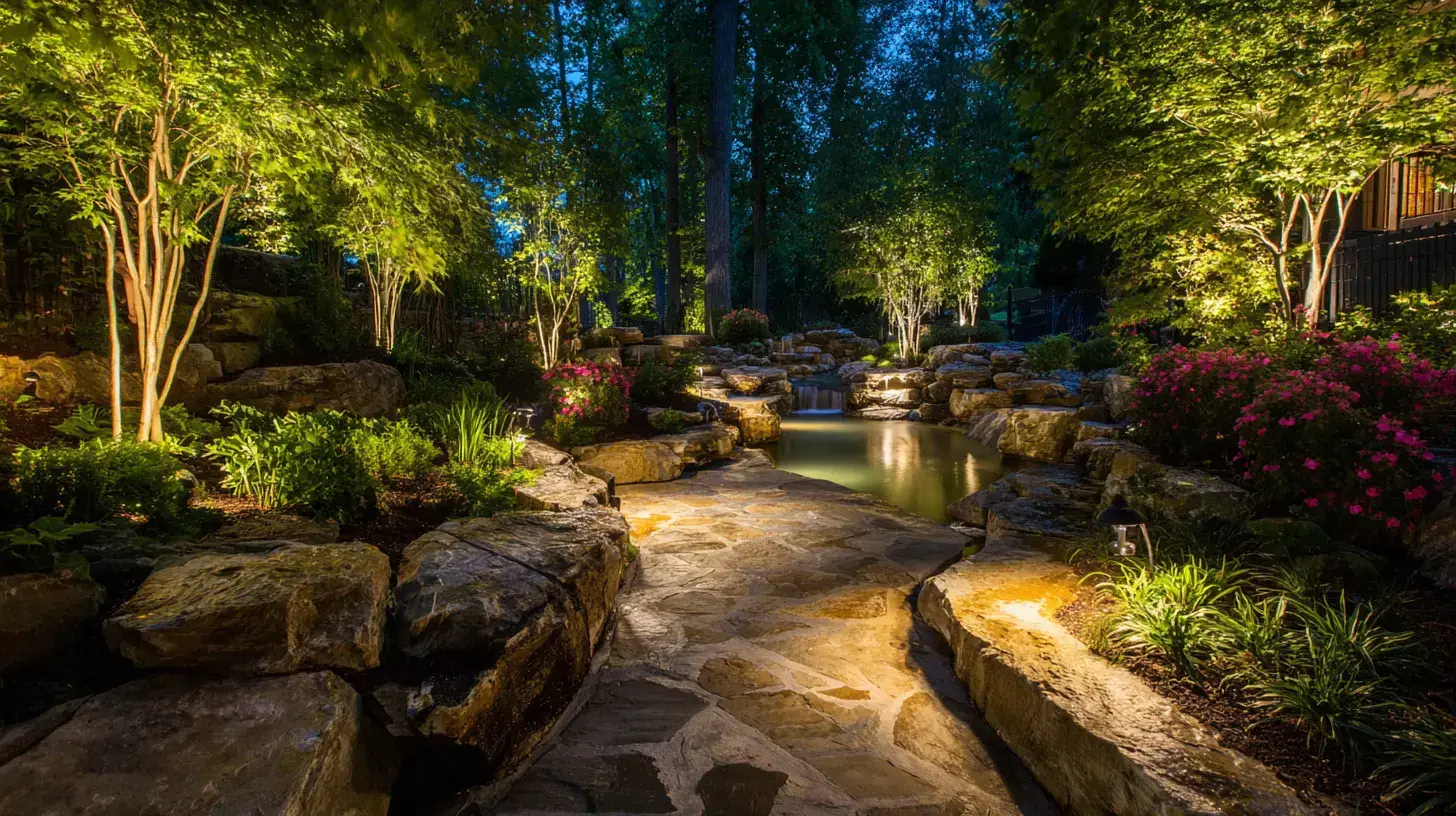
The process of evaluating the best outdoor lighting options requires looking far beyond initial lumen output and fixture aesthetics to assess transformer voltage drop, solid-state diode thermal management, color rendering indices, and IP ingress protection ratings. These distinct illumination strategies are engineered to complement primary architectural manors while solving complex site challenges, such as extreme coastal corrosion, heavy wildlife impact, and strict municipal night-sky ordinances.
A common misunderstanding in property illumination is the conflation of high wattage with superior lighting quality. Property owners and inexperienced designers frequently assume that specifying ultra-bright, high-lumen floodlights automatically constitutes a professional security and aesthetic system. In practice, true lighting mastery is found in subtle contrast ratios, precise beam spreads, glare minimization, and long-term thermal stability under harsh weather extremes.
Oversimplification risks occur when project evaluations focus strictly on fixture price or initial visual brightness rather than electrical load distribution and optical engineering. For example, a cheap low-voltage lighting layout wired with undersized cable will experience severe voltage drop, causing fixtures at the end of the run to emit dim, yellowish light. Furthermore, treating an outdoor electrical grid as a static appliance array ignores environmental reality, as plant growth blocks beams, soil settling severs buried lines, and water enters poorly sealed housings. Therefore, the most effective evaluations account for electrical resistance and physical wear, ensuring the lighting system remains balanced as the property matures over time.
Deep Contextual Background
The evolution of residential exterior illumination reflects shifting electrical technologies, architectural philosophies, and cultural attitudes toward night safety over the past century. Historically, outdoor lighting was restricted to high-pressure gas lamps, incandescent carriage lights, and rudimentary line-voltage incandescent floods that consumed massive amounts of electricity, generated intense heat, and produced harsh, high-glare pools of light with poor color rendering.
During the late twentieth and early twenty-first centuries, the advent of solid-state light-emitting diodes, high-efficiency magnetic and electronic low-voltage transformers, and computerized dimming protocols revolutionized exterior design. Designers and landscape architects transitioned away from glaring security spot lamps toward subtle, architectural-grade LED fixtures engineered for specific color temperatures and beam spreads. This historical trajectory established the foundation for modern site planning, where energy efficiency, dark-sky preservation, and sophisticated nighttime aesthetics coexist across varied property scales.
Today, contemporary master lighting design incorporates smart-home mesh automation, astronomical time-clock controls, circadian color-tuning, and robust marine-grade brass housings. This historical evolution shifts the designer’s role from an electrical installer to a nocturnal lighting artist who integrates optical physics, electrical engineering, and architecture into a unified, sustainable property plan.
Conceptual Frameworks and Mental Models
Navigating the complexities of large-scale exterior illumination requires structured mental models that balance photometric science, electrical engineering, and spatial psychology.
-
The Layered Illumination Hierarchy: This framework sequences ambient, task, accent, and safety lighting into a cohesive nightscape. It models how broad vertical surface washing, precise spotlighting on specimen trees, and low-level step lighting combine to eliminate harsh shadows without creating light pollution.
-
The Voltage Drop Continuum: This evaluates how electrical resistance scales across long wire runs in low-voltage landscape systems. Consequently, it models the transition from stable power delivery at the transformer to dimming and diode failure caused by undersized copper conductors.
-
The Color Temperature Spectrum: This analyzes Kelvin ratings not as mere stylistic preference, but as a psychological and biological tool. Thus, it structures warm 2700K light for intimate living zones and neutral 3000K light for crisp architectural detailing.
-
The Glare Control Matrix: This breaks down luminaire placement and shielding angles to ensure light sources remain invisible from primary viewing angles, preserving human night vision and architectural drama.
Key Categories or Variations
High-end exterior lighting manifests through several distinct fixture typologies and technological variations. Each category is defined by optical engineering, power delivery, and functional priorities.
| Category | Primary Power & Optical Design | Core Technical Focus | Key Trade-Offs |
| Solid-State LED Up-Lighting | 12V–24V AC/DC low-voltage brass housing, narrow beam | Specimen tree accenting, architectural facade grazing | Requires precise aiming to prevent light trespass, prone to lens dirt accumulation |
| Integrated Linear Step Lights | Recessed faceplate fixtures, asymmetric wide throw | Stairway safety, retaining wall safety, glare-free walkway illumination | Labor-intensive rough-in installation, difficult to retrofit after concrete pouring |
| Architectural Down-Lighting | Tree-mounted or eave-mounted wide-angle arrays | Moonlighting simulation, large patio wash, wide area coverage | Requires secure tree-mounting brackets that accommodate trunk growth |
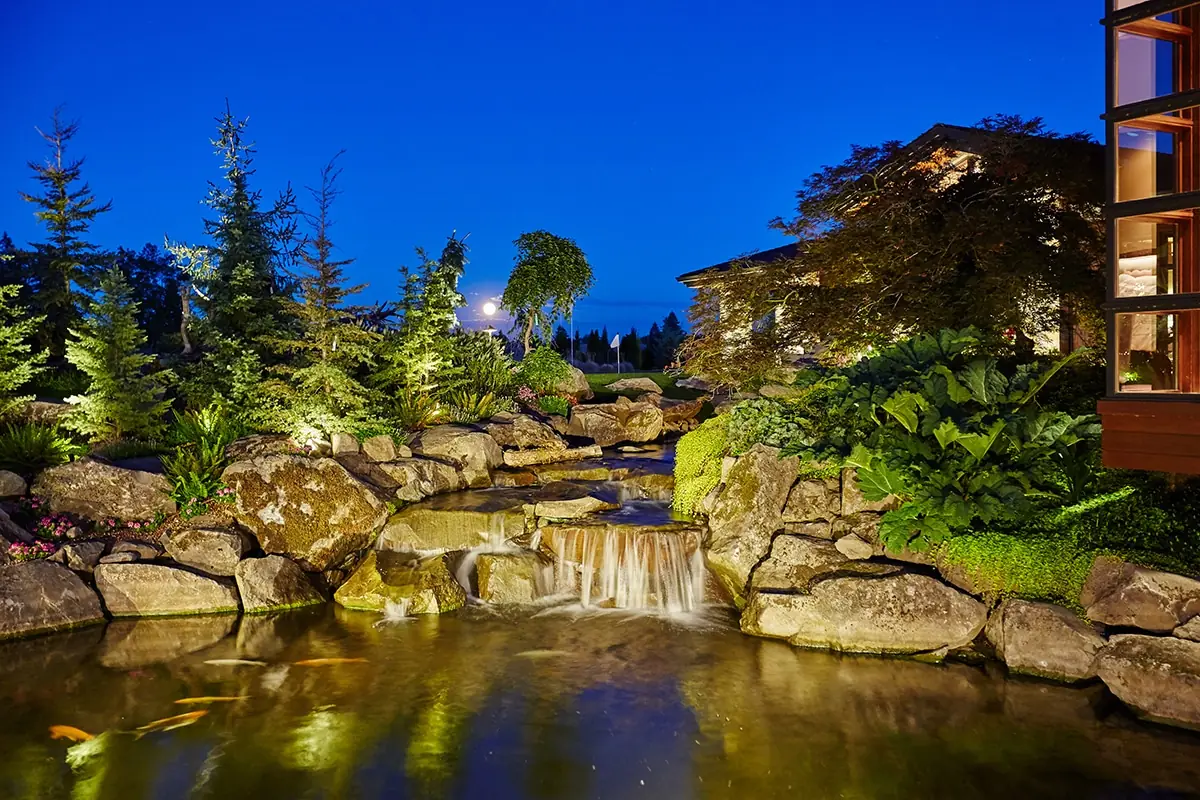
| Submersible Pond & Pool Lights | IP68 waterproof brass or stainless steel fixtures | Water feature illumination, cascading spillway highlighting | Demands rigorous waterproof seal maintenance and low-voltage isolation |
| Path & Spread Luminaires | Louvered mushroom caps, 360-degree radial throw | Walkway navigation, low-level ground washing, trip hazard reduction | Vulnerable to physical damage from string trimmers and landscape maintenance |
| Smart-Controlled RGBW Accent Grids | DMX-addressable color-changing LED strips | Architectural accenting, seasonal event programming, dynamic scenes | Higher initial equipment cost, complex digital control programming required |
Realistic Decision Logic
When property designers configure master blueprints for exterior illumination, selection depends on three immutable site factors. First, they evaluate regional weather extremes and moisture exposure levels. Second, they analyze the vertical and horizontal surfaces requiring accentuation relative to viewer sightlines. Finally, they consider local municipal ordinances governing light trespass and night-sky protection. For instance, a coastal marine property requires solid cast brass or 316 stainless steel housings to resist salt corrosion, whereas an inland woodland estate prioritizes tree-mounted down-lighting and deeply shielded up-lights to protect local wildlife corridors.
Detailed Real-World Scenarios
A : The Multi-Zone Estate Entryway
-
Constraints: Long winding driveways, dense canopy cover blocking ambient street light, heavy winter snowpacks, and long electrical wire runs.
-
Decision Points: Installing heavy-gauge 10-AWG direct-burial copper wire; deploying multi-tap magnetic transformers to overcome voltage drop over five hundred feet of run.
-
Failure Modes: Undersized cable causing the final tree up-lights to flicker or dim; snowplows shearing off ground-level path lights set too close to the drive edge.
-
Second-Order Effects: The heavy-gauge wiring and robust magnetic transformer deliver stable voltage to all fixtures. However, the deep wire trenching temporarily disrupts established roadside root zones, requiring careful hand-digging around heritage oaks.
B : The Waterfront Modern Glass Villa
-
Constraints: High salinity sea air, intense window glare reflecting interior and exterior lights, expansive glass facades causing mirror effects at night, and strict dark-sky codes.
-
Decision Points: Utilizing narrow-beam recessed architectural up-lights with internal honeycomb louvers to eliminate direct glare; specifying marine-grade 316 stainless steel fixtures.
-
Failure Modes: Exterior light bouncing off floor-to-ceiling glass, creating an opaque mirror that blocks interior views of the night ocean; salt corrosion pitting inferior aluminum housings within months.
-
Second-Order Effects: Precision-shielded exterior lighting successfully eliminates interior reflection and complies with waterfront dark-sky rules, but requires monthly freshwater rinsing of fixture lenses to prevent salt crusting.
C : The Steep Terrain Retaining Wall Complex
-
Constraints: Multi-tiered stone retaining walls, complex masonry steps, zero tolerance for exposed wiring, and high moisture accumulation behind walls.
-
Decision Points: Pre-planning core-drilled conduit channels through wall blocks during masonry construction; installing low-profile integrated LED step lights powered by waterproof low-voltage drivers.
-
Failure Modes: Water freezing inside unsealed conduit channels, cracking wires; settling stone blocks shearing off rigid fixture stems.
-
Second-Order Effects: The pre-planned core-drilling and waterproof housing ensure a clean, invisible wiring grid. However, replacing a failed driver unit embedded within the stone wall requires dismantling adjacent masonry joints.
Planning, Cost, and Resource Dynamics
Executing comprehensive exterior lighting projects involves balancing direct capital expenditures with ongoing electrical and maintenance resource consumption. The financial structure of professional illumination extends far beyond initial fixture catalog prices.
-
Direct Costs: Solid-state brass luminaires, multi-tap magnetic transformers, direct-burial low-voltage cable, LED lamps, and smart control hubs.
-
Indirect Costs: Electrical permit acquisition, trenching and boring labor, professional photometric engineering design, and post-installation aiming adjustments.
-
Opportunity Costs: Restricting evening property access during trenching phases; trading off high-intensity decorative color displays for energy-efficient, understated warm-white illumination.
-
Variability Factors: Subsurface ledge rock requiring specialized trenching equipment; sudden supply chain lead-time shifts for custom brass finishes.
Financial and Resource Allocation Range
| Project Tier | Typical Budget Allocation (%) | Primary Capital Focus | Long-Term Resource Profile |
| Power Infrastructure & Transformers | 25% – 35% | Multi-tap magnetic transformers, heavy-gauge copper cable, smart relays | Low ongoing maintenance, high electrical stability value |
| Fixture Procurement & Optics | 30% – 40% | Cast brass luminaires, specialized lenses, glare shields, LED modules | Medium maintenance, periodic lens cleaning and bulb swaps |
| Professional Design & Engineering | 15% – 25% | Photometric mapping, voltage drop calculations, aiming sessions | Low ongoing maintenance, high aesthetic and safety value |
| Trenching, Boring & Installation | 10% – 20% | Subsurface burial, core drilling, waterproof splicing connections | Low ongoing maintenance, high structural reliability value |
Tools, Strategies, and Support Systems
Realizing elite exterior illumination on large properties relies on an ecosystem of specialized tools, digital planning platforms, and expert electrical support systems.
-
Digital Photometric Rendering Software: Utilized to model lumen distribution, foot-candle levels, and light trespass boundaries across complex property topography prior to installation.
-
True RMS Digital Multimeters: Essential diagnostic tools used to measure exact voltage drop at the furthest terminal points of low-voltage cable runs.
-
Heavy-Duty Cable Trenchers and Boring Rigs: Mechanical equipment required to bury low-voltage supply lines below standard landscaping cultivation depths.
-
Waterproof Heat-Shrink Solder Connectors: Specialized electrical connectors lined with marine-grade adhesive to prevent moisture intrusion at underground wire splices.
-
Adjustable Beam Angle Test Kits: Portable battery-powered test fixtures used by designers on-site at night to dial in exact beam spreads before final mounting.
-
Laser Inclinometers and Aiming Lasers: Precision tools used to align up-lights and wall-washers to exact architectural angles without trial-and-error glare.
-
Certified Low-Voltage Lighting Technicians: Retained to oversee code compliance, transformer load balancing, and smart control integration.
Risk Landscape and Failure Modes
Sophisticated exterior lighting installations carry distinct operational and electrical risks that can compromise asset value if installation teams fail to manage them actively.
-
Voltage Drop Degradation: Undersized wire runs or overloaded transformer taps causing terminal voltage to drop below 10.5 volts, resulting in flickering or premature LED driver failure.
-
Moisture Ingress at Splices: Improperly sealed underground wire splices allowing groundwater intrusion, tripping GFCI breakers and shorting entire lighting zones.
-
Thermal Overheating of Diodes: Enclosed fixtures lacking adequate heat-sink dissipation surfaces experiencing accelerated lumen depreciation and premature diode burnout.
-
Physical Mechanical Shear: Landscaping equipment, string trimmers, or heavy foot traffic snapping fixture stems and exposing live low-voltage wires.
-
Excessive Light Trespass: Poorly aimed up-lights projecting stray beams into neighboring windows or upper-story bedrooms, violating municipal codes and causing light pollution.
Governance, Maintenance, and Long-Term Adaptation
A luxury exterior lighting installation is a permanent electrical infrastructure asset that requires structured governance to preserve its operational and aesthetic value. Transitioning from installation to long-term stewardship demands rigorous oversight.
-
Monitoring Protocols: Quarterly night audits to identify burned-out lamps, shifted fixture alignments, and overgrown foliage blocking beam paths.
-
Review Cycles: Annual electrical audits conducted by technicians to check transformer load draws, terminal block corrosion, and photocell sensor accuracy.
-
Adjustment Triggers: Pre-established intervention thresholds. Specifically, repositioning up-lights when mature plant growth blocks more than 20% of the beam throw, or replacing transformer fuses immediately upon tripping.
-
Layered Maintenance Checklist:
-
Weekly: Visual check of automated timer schedules and smart control app connectivity.
-
Monthly: Lens cleaning to remove hard water spots, pollen, and dust accumulation on ground fixtures.
-
Annually: Underground splice box inspection, transformer terminal tightening, and directional re-aiming of seasonal foliage zones.
-
Measurement, Tracking, and Evaluation
Evaluating the success and performance of an elite exterior lighting master plan requires both qualitative assessment and quantitative operational metrics.
-
Leading Indicators: Voltage measurements taken directly at fixture terminals confirming a healthy 11.5 to 12 volts under full load.
-
Lagging Indicators: Total seasonal energy consumption volumes, component replacement frequency ratios, and enduring property appraisal valuations reflecting night appeal.
-
Qualitative Signals: Complete absence of direct glare from viewing positions, balanced contrast between architectural focal points and dark negative space, and smooth, shadow-free transitions along walkways.
-
Documentation Examples:
-
The Lighting Circuit Ledger: A digital log tracking transformer zone loads, wire gauges, and fixture wattages across the property.
-
The Night Audit Report: Quarterly logs detailing fixture aiming adjustments, lens cleaning dates, and burnt-out component replacements.
-
The Photometric Compliance Record: Certified documentation verifying that all outdoor light fixtures comply with local dark-sky and maximum foot-candle limits.
-
Common Misconceptions and Oversimplifications
-
Myth: Higher wattage LED lamps always produce a better, safer outdoor lighting scheme.
-
Correction: Excessive lumen output creates harsh glare, washes out architectural detail, destroys night vision, and attracts unwanted insects.
-
-
Myth: Low-voltage lighting systems are completely safe from shock hazard and require no professional installation.
-
Correction: While low-voltage systems reduce electrocution risk, overloaded transformers and improper wire splicing can cause electrical fires or equipment burnout.
-
-
Myth: Solar-powered garden lights offer a viable, high-performance alternative to wired low-voltage systems.
-
Correction: Consumer solar fixtures lack sufficient battery capacity and diode power to provide reliable architectural accenting or sustained winter illumination.
-
-
Myth: Once landscape lighting is aimed and installed, it never requires adjustment.
-
Correction: As trees grow, shrubs mature, and soil settles, fixture beam paths become blocked or misaligned, requiring regular seasonal re-aiming.
-
-
Myth: All outdoor lighting fixtures are fully waterproof and can withstand being submerged in standing water.
-
Correction: Only fixtures rated IP68 with proper seals are suitable for submersion; standard IP65 path lights will fail if subjected to standing water.
-
-
Myth: Leaving exterior lights on all night provides maximum home security.
-
Correction: Continuous all-night illumination often creates deep, dark shadows that conceal intruders while wasting electricity and violating dark-sky principles.
-
-
Myth: Color temperature does not matter as long as the fixture emits bright white light.
-
Correction: Cool white light (5000K+) creates a sterile, clinical atmosphere, whereas warm white light (2700K) enhances organic textures and human comfort.
-
-
Myth: Wire gauge thickness does not matter on short runs under fifty feet.
-
Correction: High current draws through thin wire gauges on short runs can still suffer significant voltage drop if total fixture wattage exceeds cable capacity.
-
Ethical, Practical, and Contextual Considerations
Designing and implementing expansive exterior lighting systems carries significant environmental responsibilities toward regional ecosystems, nocturnal wildlife, and dark-sky preservation. Unshielded or excessively bright outdoor lighting disrupts the circadian rhythms of migratory birds, disorients nocturnal pollinators, and contributes to widespread urban skyglow. Furthermore, light trespass spilling across property boundaries infringes on neighboring privacy. Responsible estate planning mandates integrating fully shielded luminaires, warm color temperatures below 3000K, astronomical timers that shut off systems during sleeping hours, and precise optical control to keep illumination strictly bounded within the property envelope. Balancing architectural night beauty with ecological stewardship ensures that grand residential lighting enhances rather than degrades the surrounding environment.
Conclusion
The realization of sophisticated exterior illumination relies on optical precision, electrical engineering discipline, and respect for the natural nocturnal environment. Surface cosmetics alone cannot support the long-term demands of large-scale residential property lighting. By grounding design in rigorous voltage drop calculations, contextual site analysis, and structured maintenance frameworks, property owners establish lighting systems that endure across decades. Ultimately, when decision-makers thoroughly evaluate and execute the best outdoor lighting options before installation begins, they ensure their projects achieve long-term resilience, aesthetic brilliance, and harmonious integration with the night.