Best Luxury Landscape Design for Large Properties: Master Guide
Sprawling residential grounds operate under distinct structural demands. Furthermore, these demands set elite property development apart from standard residential design. When acreage expands across multiple acres, environmental curation requires harmonizing civil engineering. In addition, regional botany and architectural integration must form a cohesive living framework. This level of master planning shifts the core objective. Specifically, designers move away from short-term visual impact toward long-term soil health and botanical resilience.
Developing expansive landholdings necessitates a rigorous understanding of plant communities. Consequently, native and exotic flora must interact with underlying topography and seasonal weather patterns. An effective design does not merely plant ornamental specimens. Instead, it engineers stormwater retention basins and establishes durable hardscape foundations. Therefore, the primary goal is establishing a lasting relationship between built structures and surrounding natural ecosystems.
Approaching this discipline requires examining the underlying mechanics of landscape mastery. The following analysis explores the conceptual frameworks, design variations, and resource dynamics that define sophisticated estate grounds. When property owners evaluate high-end projects, identifying the best luxury landscaping for large properties ensures structural longevity, environmental harmony, and long-term financial alignment.
Understanding “best luxury landscaping for large properties”
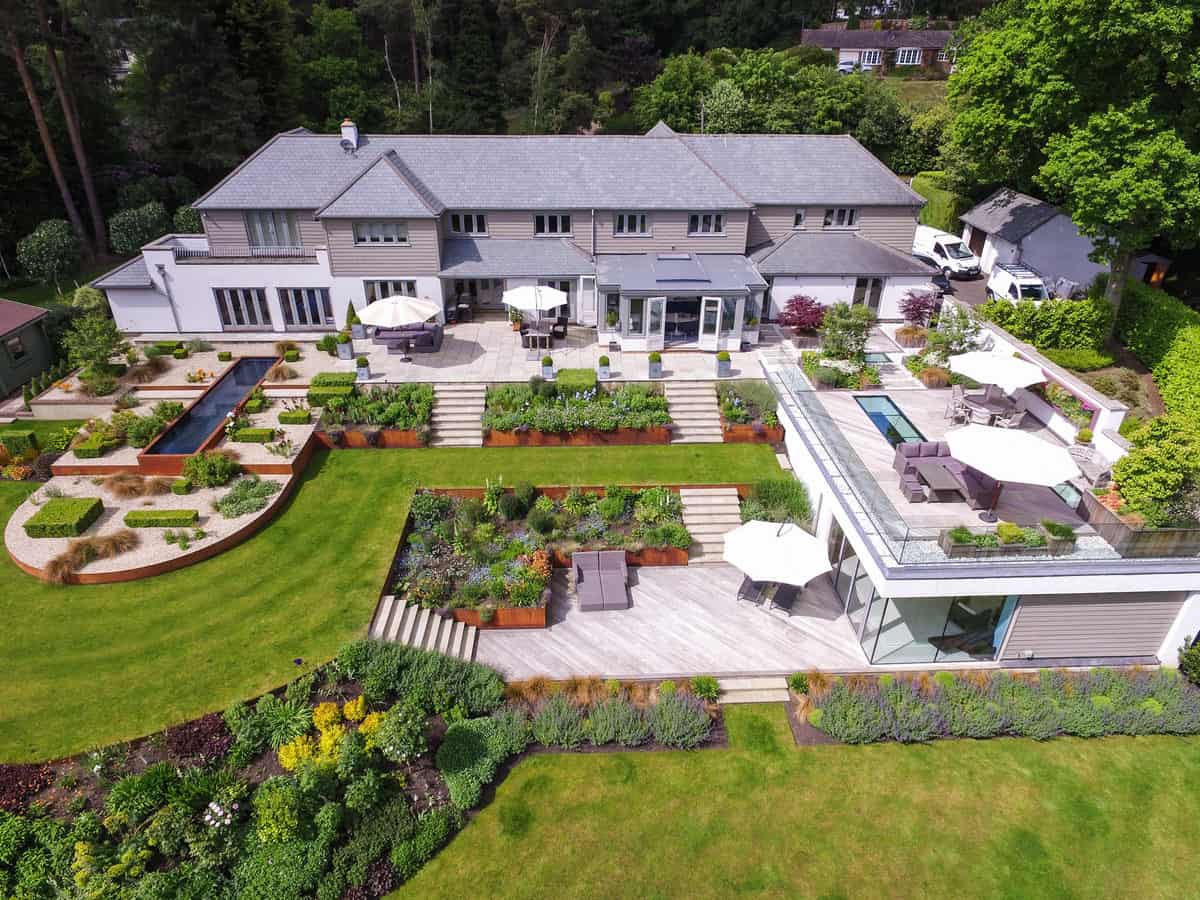
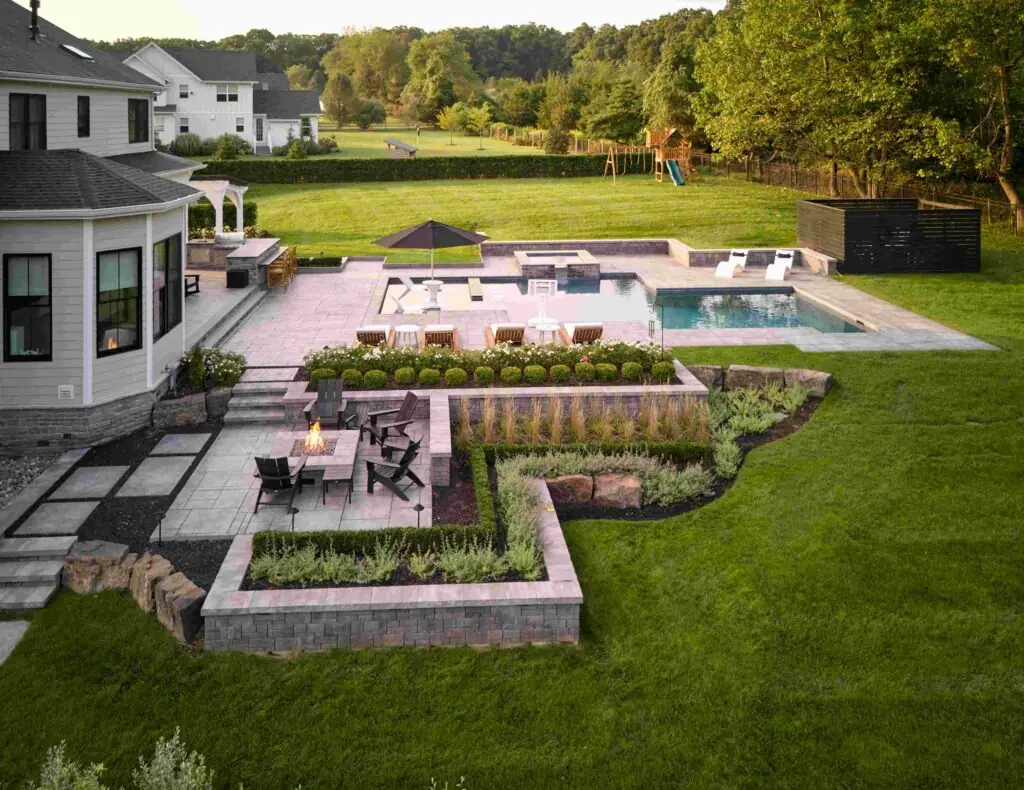
The process of defining the best luxury landscaping for large properties requires looking far beyond surface aesthetics. Specifically, evaluators must assess sub-grade soil profiles, smart irrigation integration, and climate-adaptive botanical selections. These distinct design strategies are engineered to complement primary architectural manors. Thus, they solve complex site challenges, such as severe slope erosion and municipal conservation mandates.
A common misunderstanding in estate property management is the conflation of high material costs with true landscape quality. Property owners frequently assume that installing expensive imported stone and massive specimen trees automatically constitutes a superior master plan. In practice, true landscape mastery is found in hydrological balance, soil biology, and long-term structural resilience under varying environmental pressures.
Oversimplification risks occur when project evaluations focus strictly on immediate visual lushness rather than foundational site engineering. For example, an elaborate formal garden built over unamended fill will inevitably suffer root failure during extreme weather events. Furthermore, treating a living landscape as a static painting ignores biological reality, as plant canopies mature and root systems expand. Therefore, the most effective evaluations account for ecological succession, ensuring the property environment improves as soil profiles mature over time.
Deep Contextual Background
The evolution of grand residential property design reflects shifting horticultural philosophies and civil engineering capabilities over the past two centuries. Historically, elite country seats relied on formal geometric layouts and expansive deer parks. Consequently, these historic systems asserted human control over wilderness through strict symmetry. These designs required immense manual labor for upkeep and served primarily as theatrical foregrounds for architectural display.
During the nineteenth and twentieth centuries, the advent of mechanized earthmoving equipment revolutionized property development. Furthermore, municipal water networks and modern plant breeding transformed groundskeeping. Designers transitioned toward naturalistic landscapes inspired by picturesque movements, blending architecture seamlessly into topography. This historical trajectory established the foundation for modern estate planning, where ecological restoration and engineered luxury coexist.
Today, contemporary master landscape design incorporates advanced geographic information systems and soil pathogen diagnostics. This historical evolution shifts the designer’s role from a simple decorator to an environmental orchestrator. Consequently, they integrate civil engineering, botany, and hydrology into a unified, sustainable property plan.
Conceptual Frameworks and Mental Models
Navigating the complexities of large-scale estate design requires structured mental models. These models balance ecological science, spatial geometry, and operational logistics.
-
The Hydrological Watershed Continuum: This framework treats the entire property as a closed water catchment system. Specifically, it sequences permeable hardscapes and bioswales into a unified network that filters runoff while preventing soil erosion.
-
The Spatial Progression Hierarchy: This evaluates how human experience transitions from private interiors to expansive wild acreage. Consequently, it models the architectural gradient from intimate courtyards to formal terraces and wild woodlands.
-
The Botanical Succession Matrix: This analyzes plant selections not as a static final picture, but as a dynamic living community. Thus, it shifts in size and density across decades as canopy layers close.
-
The Microclimate Zoning Model: This breaks down a large property into distinct thermal and moisture zones. Furthermore, it analyzes sun exposure and slope orientation, allowing precise plant selection and hardscape placement.
Key Categories or Variations
High-end estate landscaping manifests through several distinct typologies. Each category is defined by geographical context, botanical palette, and functional priorities.
| Category | Primary Botanical Adaptation | Core Technical Focus | Key Trade-Offs |
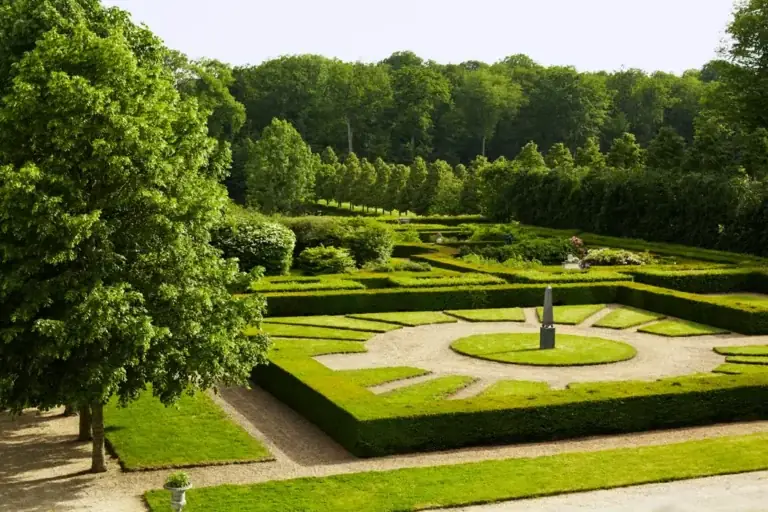
| Neoclassical Formal Estate | Boxwood, Carpinus, Picea species | Axial symmetry, clipped hedges, structural focal points | High ongoing pruning intensity, strict water management |
| Naturalistic Woodland Sanctuary | Native oaks, ferns, understory shade flora | Wildlife corridor preservation, minimal soil disturbance | Slower visual maturity, potential pest management challenges |
| Modern Minimalist Compound | Architectural grasses, clean concrete, specimen pines | Spatial clarity, dramatic lighting, geometric hardscapes | Low tolerance for botanical errors, high initial installation cost |
| Mediterranean Dry-Climate Haven | Olive trees, lavender, drought-tolerant succulents | Water conservation, thermal mass stonework, gravel grading | Sensitive to severe winter freezing, limited soft green turf areas |
| Alpine & High-Altitude Retreat | Conifers, granite boulders, hardy perennials | Snow-load resilience, windbreak integration, drainage | Short growing season, specialized soil requirements |
| Coastal Marine Compound | Salt-tolerant palms, dune grasses, wind-pruned shrubs | Salt-spray resistance, sandy sub-base stabilization | High corrosive wear on hardscape fixtures, strict zoning rules |
Realistic Decision Logic
When property designers configure master plans for sprawling estates, selection depends on three immutable site factors. First, they evaluate regional climatic temperature zones. Second, they analyze prevailing seasonal wind patterns. Finally, they consider local watershed regulations. For instance, a coastal marine compound requires salt-tolerant dune plantings and wind-baffling masonry. Conversely, an inland alpine retreat demands cold-hardy conifers and heavy snow-load structural framing.
Detailed Real-World Scenarios
A : The Steep Sloped Ravine Estate
-
Constraints: Severe grade changes exceeding thirty percent, unstable clay soils, and high surface water runoff velocity.
-
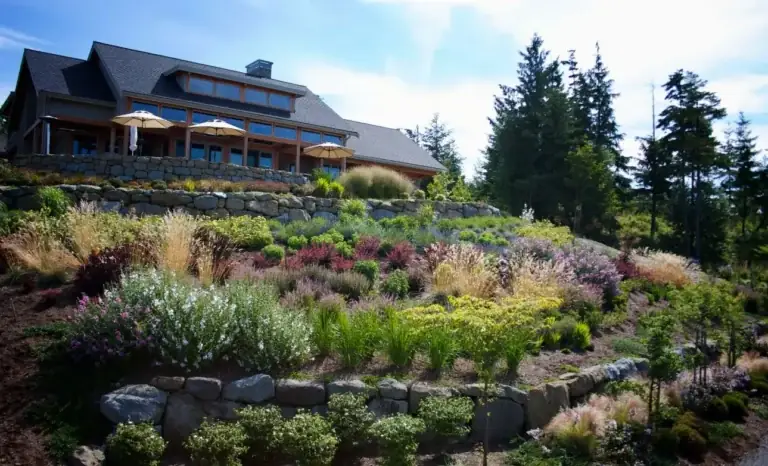
Decision Points: Engineering terraced retaining walls using local stone. Furthermore, establishing deep-rooting native shrub matrices.
-
Failure Modes: Improper sub-surface drainage causing hydrostatic pressure behind retaining walls. Additionally, sheet erosion washes out newly planted slopes.
-
Second-Order Effects: Terracing successfully stabilizes the slope and creates usable garden pads. However, it alters local groundwater percolation paths, requiring additional drainage outlets.
B : The Arid Desert Oasis Compound
-
Constraints: Extreme summer temperatures, alkaline caliche soils, severe water scarcity, and solar glare.
-
Decision Points: Deploying drip irrigation grids buried deep in root zones. Furthermore, utilizing decomposed granite groundcovers paired with drought-tolerant specimens.
-
Failure Modes: Salt accumulation in root zones due to high evaporation rates. Moreover, heat reflection off stone paving scorches adjacent foliage.
-
Second-Order Effects: Xeriscaping dramatically reduces water consumption. However, it creates local heat-island effects around primary outdoor living pavilions.
C : The Wetland-Adjacent Country Seat
-
Constraints: High seasonal water tables, saturated organic soils, strict environmental setbacks, and mosquito pressures.
-
Decision Points: Installing raised boardwalks and patios. Furthermore, planting moisture-loving native bald cypress and ferns.
-
Failure Modes: Conventional heavy stone hardscapes sinking and cracking as underlying soils shift. Additionally, stagnant water accumulates in depressions.
-
Second-Order Effects: Naturalistic rain gardens successfully manage site drainage. However, they require careful management to prevent invasive reed encroachment.
Planning, Cost, and Resource Dynamics
Executing comprehensive master landscape designs across large landholdings involves balancing direct capital expenditures with ongoing resource consumption. The financial structure of elite property development extends far beyond initial installation contracts.
-
Direct Costs: Civil excavation, architectural stonework, specimen tree procurement, and automated smart irrigation systems.
-
Indirect Costs: Engineering permit acquisition, environmental impact assessments, soil amendment trucking, and crane rentals.
-
Opportunity Costs: Allocating large acreage to natural meadows versus formal lawns. Furthermore, restricting property access during structural grading phases.
-
Variability Factors: Subsurface rock shelves requiring pneumatic hammering. Additionally, sudden supply chain delays for imported stone cause timeline shifts.
Financial and Resource Allocation Range
| Project Tier | Typical Budget Allocation (%) | Primary Capital Focus | Long-Term Resource Profile |
| Site Grading & Drainage Engineering | 30% – 40% | Earthmoving, retaining walls, stormwater retention, sub-drains | Low ongoing maintenance, high structural foundation value |
| Hardscape & Pavilion Construction | 25% – 35% | Terraces, pools, stone pathways, outdoor kitchens, pergolas | Medium maintenance, high periodic sealing and repair costs |
| Botanical Procurement & Planting | 20% – 30% | Specimen trees, shrubs, perennial beds, turf establishment | High seasonal maintenance, ongoing pruning and plant healthcare |
| Technology & Lighting Grid | 10% – 15% | Smart irrigation controllers, LED fixtures, security integration | Recurring annual operational and maintenance expense |
Tools, Strategies, and Support Systems
Realizing elite outdoor spaces on large properties relies on an ecosystem of specialized tools, digital planning platforms, and expert advisory networks.
-
High-Resolution Drone LiDAR Topographic Mapping: Utilized to generate centimeter-accurate elevation models of sprawling terrain. Consequently, this guides precise civil grading design.
-
GPS-Guided Earthmoving Machinery: Automated excavators and graders programmed to execute complex architectural contours with minimal operator error.
-
Sub-Surface Hydrological Moisture Sensors: Deployed across micro-zones to monitor root-zone volumetric water content in real time.
-
Thermal and Multispectral Plant Health Drones: Airborne sensors used to detect water stress and nutrient deficiencies across property canopies before visible symptoms emerge.
-
Heavy-Capacity Tree Spades and Cranes: Specialized machinery required to transport and plant mature specimen trees weighing several tons.
-
Geotextile Stabilization Fabrics: Advanced synthetic matrices installed beneath steep slopes to prevent sub-base shifting and rutting.
-
Certified Arborist Consultancies: Retained to oversee preservation of heritage trees and ensure compliance with regional environmental regulations.
Risk Landscape and Failure Modes
Sophisticated master landscape designs on large estates carry distinct operational and biological risks that can compromise asset value if teams do not actively manage them.
-
Hydrostatic Wall Failure: Inadequate back-drainage behind massive retaining structures leads to water pressure buildup, resulting in catastrophic wall blowouts.
-
Specimen Transplant Shock: Large mature trees fail to re-establish root systems after relocation. Consequently, this leads to slow canopy dieback and expensive removal.
-
Drainage Siltation and Clogging: Fine soil particles wash into underground drain pipes, plugging systems and causing unexpected surface flooding.
-
Irrigation System Malfunction: Mainline pressure failures deliver unchecked water volumes that erode delicate garden beds and wash away mulch.
-
Pest and Pathogen Epidemics: Monoculture hedges or compromised specimen trees succumb rapidly to localized insect infestations that spread unchecked.
Governance, Maintenance, and Long-Term Adaptation
A luxury estate landscape installation is a living infrastructure asset that requires structured governance to preserve its aesthetic and financial value. Transitioning from installation to long-term stewardship demands rigorous oversight.
-
Monitoring Protocols: Bi-weekly soil moisture profiling, monthly structural inspections, and continuous weather station data logging.
-
Review Cycles: Quarterly horticultural audits conducted by specialists to assess canopy health, soil compaction, and drainage outfall clarity.
-
Adjustment Triggers: Pre-established intervention thresholds. Specifically, initiating deep-root fertilization when soil nutrient assays drop below critical levels.
-
Layered Maintenance Checklist:
-
Weekly: Hardscape sweeping, debris clearance from drainage grates, and lawn mowing.
-
Monthly: Irrigation head alignment checks, exterior lighting cleaning, and structural shrub pruning.
-
Annually: Comprehensive soil aeration, stone terrace re-pointing, and mulch replenishment.
-
Measurement, Tracking, and Evaluation
Evaluating the success and performance of an elite landscape master plan requires both qualitative assessment and quantitative operational metrics.
-
Leading Indicators: Root depth measurements during core sampling and soil infiltration rate benchmarks.
-
Lagging Indicators: Total seasonal water consumption volumes and structural maintenance expenditure ratios over baseline years.
-
Qualitative Signals: Seamless visual transitions between architecture and nature, plus the absence of standing water or soil erosion scars.
-
Documentation Examples:
-
The Estate Grounds Ledger: A digital log tracking seasonal pruning schedules, fertilizer applications, and hardscape repairs by zone.
-
The Watershed Management Audit: Monthly records comparing actual site runoff volumes against engineered stormwater capacities.
-
The Botanical Inventory Database: A comprehensive register of all specimen trees and rare shrubs tracking health status and maintenance history.
-
Common Misconceptions and Oversimplifications
-
Myth: Installing fully grown mature trees instantly creates an established, maintenance-free landscape.
-
Correction: Mature specimen trees suffer severe transplant stress and require intensive watering and root care for several years.
-
-
Myth: Hardscaping with concrete and stone entirely eliminates ongoing yard maintenance chores.
-
Correction: Hardscapes require periodic pressure washing, joint re-pointing, and drainage clearing to prevent deterioration.
-
-
Myth: Native plants require zero water or maintenance once planted on large estates.
-
Correction: While native plants tolerate local climates better, they still require establishment irrigation during their first two growing seasons.
-
-
Myth: Automatic irrigation systems completely remove the need for human monitoring of soil moisture.
-
Correction: Timers fail and sensors drift; regular physical checks remain essential to prevent over-watering.
-
-
Myth: Heavy synthetic fertilizers are necessary to maintain lush greenery across grand estates.
-
Correction: Over-reliance on synthetic fertilizers degrades soil microbiology over time, inviting disease outbreaks.
-
-
Myth: Retaining walls do not require professional engineering if they are under four feet high.
-
Correction: Unengineered walls on expansive estates often fail due to saturated clay soils and slope pressure.
-
-
Myth: Lighting every single tree and pathway creates the highest quality luxury nightscape.
-
Correction: Over-lighting creates light pollution, washes out architectural nuance, and disrupts nocturnal wildlife.
-
-
Myth: A luxury estate landscape can be completed in a single accelerated construction season.
-
Correction: True estate development requires staged grading, soil settling, and botanical acclimatization spanning multiple years.
-
Ethical, Practical, and Contextual Considerations
Designing and maintaining expansive luxury landscapes carries significant environmental responsibilities toward regional watersheds and wildlife habitats. Extensive turf acreage and intensive irrigation can strain regional aquifers and municipal water supplies during dry summer months. Furthermore, excessive landscape lighting disrupts migratory bird patterns and nocturnal pollinators. Therefore, responsible estate planning mandates integrating rainwater harvesting cisterns, intelligent drip irrigation matrices, and dark-sky compliant outdoor lighting fixtures. Balancing grand architectural landscaping with ecological stewardship ensures that large estates enhance their surrounding regional environment.
Conclusion
The realization of sophisticated outdoor environments relies on civil engineering precision, ecological foresight, and respect for natural biological systems. Surface cosmetics alone cannot support the long-term demands of large-scale residential landholdings. By grounding design in rigorous soil physics and structured maintenance frameworks, property owners establish outdoor spaces that endure across decades. Ultimately, when decision-makers thoroughly evaluate and execute the best luxury landscaping for large properties, they ensure their projects achieve long-term resilience and aesthetic brilliance.