Best Perennial Garden Options: Master Horticultural Design Guide
Designing enduring perennial landscapes requires navigating complex biological, ecological, and microclimatic variables that differentiate permanent horticultural installations from temporary seasonal plantings. When botanical curators, landscape architects, and ecological restoration specialists curate multi-season herbaceous frameworks across diverse regional biomes, the work demands harmonizing soil biology, root zone hydrology, phenological succession, and competitive plant dynamics. This level of master planning shifts the core objective away from instant floral gratification toward long-term ecological resilience, structural permanence, and self-sustaining plant communities across changing climate cycles.
Developing comprehensive perennial garden layouts necessitates a rigorous understanding of how soil microbiota, mycorrhizal networks, root depth stratification, and seasonal dormancy cycles interact with local hardiness zones and hydrological conditions. A truly successful perennial design does not merely group decorative plants together based on flower color or immediate visual contrast. Instead, it calculates root volume vectors, choreographs canopy closure timing, establishes precise moisture gradient zones, and balances native petrology against microclimatic exposure factors. Consequently, the primary objective is establishing a permanent, balanced relationship between long-lived herbaceous species and surrounding architectural elements without compromising ecological stability or soil health.
Approaching this discipline requires examining the underlying mechanics that separate superficial gardening choices from true horticultural mastery. Furthermore, the following analysis explores conceptual frameworks, ecological variations, economic resource dynamics, and adaptive maintenance paradigms that define sophisticated perennial environments. When estate managers and landscape ecologists evaluate high-end permanent planting projects, mastering the implementation of best perennial garden options ensures ecological longevity, spatial harmony, and biological balance over time.
Understanding “best perennial garden options”
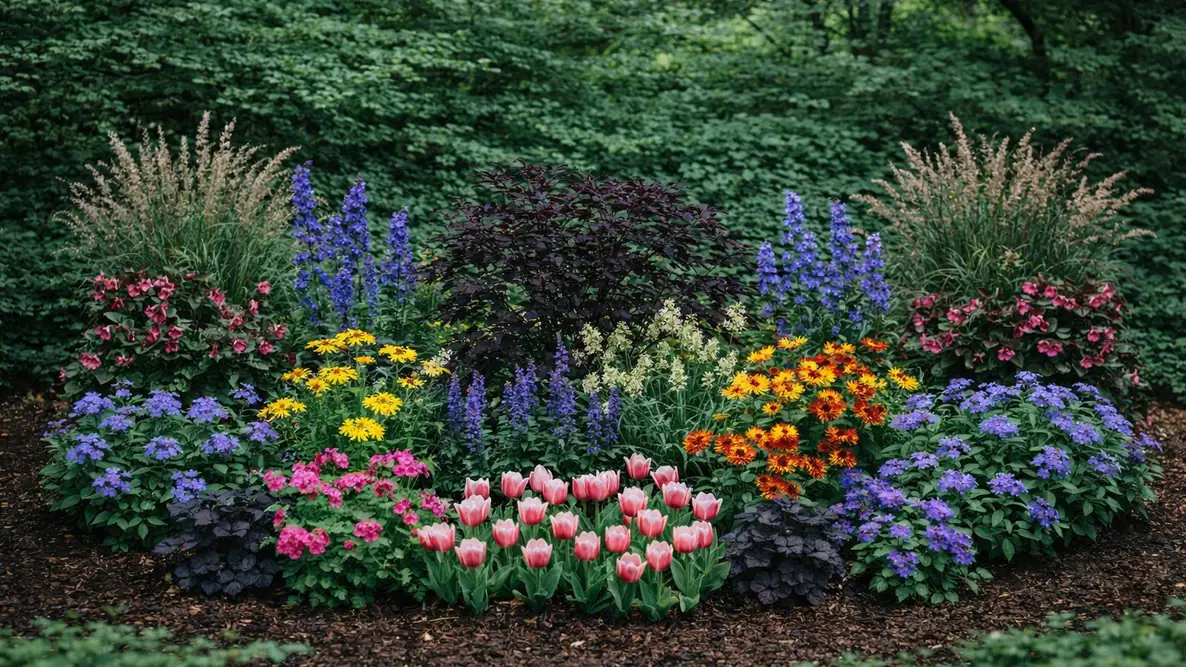
The process to execute best perennial garden options requires looking far beyond initial nursery visual displays and immediate bloom-season aesthetics. Specifically, planners must analyze root morphology, cold-hardiness thresholds, drought tolerance capacities, and long-term allelopathic interactions between neighboring plant species. These distinct horticultural blueprints are engineered to complement local soil profiles and natural rainfall patterns. However, they must simultaneously solve complex site challenges, such as aggressive weed pressure, heavy clay compaction, deer browsing, and extreme seasonal temperature fluctuations.
A common misunderstanding in perennial landscape design involves the conflation of short-lived tender perennials with true, long-lasting structural herbaceous taxa. Property owners frequently assume that any plant surviving an average winter automatically constitutes a low-maintenance, permanent garden asset. In practice, true perennial mastery is found in root zone stability, ecological niche complementarity, predictable seasonal succession, and long-term resistance to environmental stress.
Oversimplification risks occur when project evaluations focus strictly on maximum flower size or color saturation rather than plant vigor and site suitability. For example, planting moisture-loving perennials in a well-drained, south-facing slope without adequate organic matter or irrigation will inevitably result in rapid plant failure during the first summer drought. Furthermore, treating a garden bed as a static assembly ignores plant competition physics. Over time, aggressive spreaders will choke out delicate taprooted species unless spatial architecture and growth rates are factored into the initial plan. Therefore, the most effective evaluations account for biological plant behavior and long-term resource competition needs, ensuring the planting design retains its structural integrity as seasons progress.
Deep Contextual Background
The evolution of perennial garden design reflects shifting agricultural capabilities, botanical exploration, and cultural attitudes toward managed nature over centuries. Historically, permanent planting layouts were constrained by local wild flora or tightly controlled formal kitchen and medicinal gardens, relying on empirical observations passed down through generations of gardeners and monastic herbalists. Furthermore, these early installations prioritized utilitarian food production or rigid geometric symmetry over ecological succession.
During the nineteenth and twentieth centuries, the introduction of international plant hunting expeditions, hybridisation science, and the wild garden movement transformed landscape horticulture. Consequently, designers transitioned from formal carpet bedding arrangements to naturalistic perennial drifts, matrix plantings, and ecologically driven native plant communities. This historical trajectory established the foundation for modern perennial planning, where advanced soil science, plant ecology, and climate-adaptive selection coexist.
Today, contemporary master garden design incorporates phytosociological matrix planting, drought-tolerant xeric styling, native biodiversity restoration, and soil food web management. This historical evolution shifts the designer’s role from a simple decorator to an ecological plant community coordinator. Ultimately, they integrate soil science, climatology, and spatial aesthetics into a unified, sustainable landscape plan.
Conceptual Frameworks and Mental Models
Navigating the complexities of large-scale perennial planting requires structured mental models that balance ecological science, plant physiology, and long-term site dynamics.
-
The Root Stratification and Spatial Niche Model: This framework treats the soil profile as a multi-tiered vertical volume where taprooted, fibrous-rooted, and bulbous species coexist without direct root zone competition. Additionally, it optimizes water and nutrient extraction across distinct soil depths.
-
The Temporal Phenology and Succession Matrix: This evaluates how different species emerge, bloom, set seed, and enter dormancy across the four seasons. Consequently, it models the critical need for overlapping structural interest to prevent seasonal aesthetic voids.
-
The Canopy Closure and Weed Suppression Continuum: This analyzes how ground-covering foliage and dense structural perennials shade out opportunistic weed seeds over time. Therefore, it dictates planting density and spacing metrics during initial installation.
-
The Hydrological Gradient and Tolerance Model: This breaks down moisture availability across microtopographical slopes. Moreover, it models how drought-tolerant plants are mapped to elevated zones while moisture-retentive species occupy lower swales.
Key Categories or Variations
High-end perennial landscaping manifests through several distinct functional and ecological typologies. Each category is defined by botanical composition, maintenance intensity, and environmental priorities.
| Category | Primary Botanical Composition & Structure | Core Technical Focus | Key Trade-Offs |
| Native Prairie Matrix Plantings | Deep-rooted native grasses and long-lived flowering perennials interlocked in dense associations | Maximum ecological habitat creation, deep carbon sequestration, exceptional drought resilience | Slow establishment phase, perceived untidy appearance by traditional standards, high initial seed/plug cost |
| Formal Herbaceous Borders | Clump-forming cultivars, vertical spikes, and rounded mounds arranged in layered height tiers | High visual impact, classical aesthetic continuity, predictable seasonal color blocks | Intensive maintenance, regular division required, high water and fertility demands |
| Xeric and Gravel Garden Systems | Mediterranean, alpine, and desert-adapted perennials planted in mineral, well-draining sub-grades | Ultra-low irrigation requirements, heat tolerance, suppression of moisture-loving weeds | Strict intolerance for winter wetness, limited plant palette in heavy clay regions |
| Shade Woodland Understory Perennials | Broad-leaved ferns, shade-tolerant ephemerals, and rhizomatous groundcovers | Utilization of difficult dry or moist shade zones, organic soil enrichment, subtle textural beauty | Delicate establishment requirements, slow growth rates, vulnerability to soil compaction |
| Riparian and Rain Garden Perennials | Wet-feet tolerant sedges, rushes, and moisture-loving flowering species planted in bioretention basins | Stormwater mitigation, heavy metal filtration, erosion control along drainage paths | Requires specific hydrological capture zones, risk of standing water stagnation if under-drained |
| Pollinator-Centric Succession Beds | Nectar-rich and host-specific perennials chosen for continuous bloom cycles from early spring to frost | Maximizing invertebrate biodiversity, supporting native bee and butterfly populations | Requires careful pruning and deadheading schedules to maintain appearance while preserving seed heads |
Realistic Decision Logic
When landscape architects and horticulturists configure master blueprints for permanent garden spaces, selection depends on three immutable site factors. First, they evaluate local macro-climate hardiness zones and annual precipitation averages. Second, they analyze existing soil texture, whether it is heavy compacted clay, sandy loam, or organic-rich silt. Finally, they consider site light exposure levels ranging from full sun to deep structural shade. For instance, an urban rooftop installation with full sun exposure and thin structural load limits requires lightweight, drought-tolerant xeric perennials set in specialized mineral media. Conversely, a shaded residential courtyard with damp, rich loam permits lush woodland ferns and shade perennials.
Detailed Real-World Scenarios
A : The Municipal Urban Pollinator Corridor
-
Constraints: High-traffic municipal street median, poor compacted urban soil, restricted access to permanent irrigation lines, and intense reflected heat from asphalt.
-
Decision Points: Selecting ultra-tough, deep-rooting prairie perennials such as coneflowers and switchgrass; incorporating thick organic compost incorporation and deep sub-soil ripping prior to planting.
-
Failure Modes: Soil compaction preventing root penetration and causing plants to drown during heavy rainstorms; pedestrian foot-traffic trampling fragile crown margins during establishment.
-
Second-Order Effects: The deep-rooting native perennials successfully break up sub-soil compaction over time and survive summer heat without irrigation. However, the initial weed pressure requires intensive hand-weeding during the first growing season.
B : The Sloped Residential Stormwater Swale
-
Constraints: Steep residential property slope prone to topsoil erosion, heavy runoff from roof downspouts, and clay-heavy sub-grade soils.
-
Decision Points: Deploying fibrous-rooted moisture-tolerant perennials and native sedges along the flow line; constructing minor rock check-dams to slow water velocity.
-
Failure Modes: High-velocity water scouring out newly installed root plugs before establishment; root rot occurring in stagnant pools due to inadequate infiltration rates.
-
Second-Order Effects: The dense root networks stabilize the soil banks and successfully filter sediment out of stormwater runoff. Nevertheless, accumulated silt requires periodic manual clearing behind rock check-dams.
C : The Historic Estate Shaded Courtyard
-
Constraints: Deep shade cast by historic stone walls, severe root competition from mature canopy trees, and strict historic preservation guidelines prohibiting major soil excavation.
-
Decision Points: Utilizing shade-tolerant, drought-resilient woodland perennials that tolerate dry root competition; applying surface organic leaf-mold mulch layers without disturbing tree roots.
-
Failure Modes: Tree roots outcompeting perennials for available soil moisture, leading to premature wilting; lack of seasonal color contrast resulting in visual monotony.
-
Second-Order Effects: The carefully selected understory perennials establish a resilient, low-water groundcover that enhances the historic stone architecture. However, manual watering is required during extended dry summer spells to offset tree root competition.
Planning, Cost, and Resource Dynamics
Executing comprehensive perennial garden projects involves balancing direct plant material investments with long-term ecological establishment labor and soil preparation costs. The financial structure of permanent landscape creation extends far beyond initial nursery plant tags.
-
Direct Costs: Wholesale perennial plugs or container plants, bulk organic compost, soil amendments, mulch, temporary drip irrigation lines, and delivery freight fees.
-
Indirect Costs: Soil testing laboratory analyses, landscape architectural design fees, heavy machinery rental for soil loosening, and specialized installation labor.
-
Opportunity Costs: Temporary visual bareness during the first establishment year, restricted site usage during soil preparation, and higher upfront material investment compared to annual bedding plants.
-
Variability Factors: Unexpected sub-soil contamination, extreme weather events washing out new plantings, and regional nursery supply chain shortages for specific native cultivars.
Financial and Resource Allocation Range
| Project Tier | Typical Budget Allocation (%) | Primary Capital Focus | Long-Term Resource Profile |
| Soil Preparation & Amendment | 30% – 40% | Deep ripping, compost incorporation, grading, organic matter balancing | Low future maintenance, foundational for long-term plant health |
| Perennial Plant Stock Acquisition | 25% – 35% | High-integrity nursery plugs, diverse species selection, structural matrix plants | Decreases over time as plants establish self-propagating populations |
| Installation & Labor | 20% – 30% | Skilled planting crews, layout execution, mulch application, initial watering | High initial labor cost, declining operational intervention over years |
| Establishment Irrigation & Care | 5% – 10% | Temporary drip lines, weeding, selective hand-watering, early protection netting | Medium maintenance during year one, minimal by year three |
Tools, Strategies, and Support Systems
Realizing elite perennial garden installations relies on an ecosystem of specialized horticultural hand tools, soil testing instruments, and ecological management networks.
-
Broadforks and Sub-Soil Ripping Tines: Manual and mechanical tools used to fracture compacted sub-grades without inverting soil layers or destroying soil biology.
-
Digital Soil Moisture and EC Meters: Precision instruments used to monitor root zone water retention and salinity levels across varying microclimates.
-
Professional Planting Spades and Dibbles: Specialized ergonomic tools designed for rapid, accurate insertion of deep-rooted perennial plugs into prepared beds.
-
Programmable Drip Irrigation Timers: Automated watering systems equipped with rain sensors to deliver precise root-zone hydration during establishment phases.
-
Flame Weeders and Precision Hoes: Weed control implements used to manage ephemeral weed seeds in bare soil areas prior to perennial canopy closure.
-
Aromatic Deterrents and Physical Fencing: Specialized defense systems deployed to protect tender emerging shoots from vertebrate herbivores like deer and rabbits.
-
Ecological Horticultural Consultants: Professional specialists retained to perform soil microbiome analysis, plant community balancing, and long-term succession monitoring.
Risk Landscape and Failure Modes
Sophisticated perennial garden installations carry distinct biological, hydrological, and climatic risks that can compromise landscape viability if maintenance teams fail to manage them actively.
-
Crown Rot and Fungal Pathogens: Persistent standing water or excessive mulch touching plant crowns, leading to rapid bacterial or fungal decay and plant death.
-
Aggressive Monoculture Dominance: Vigorous rhizomatous perennials outcompeting and smothering delicate companion species, destroying the intended matrix balance.
-
Herbivore Grazing Collapse: Unmanaged populations of deer or voles consuming all emerging foliage and root systems during vulnerable establishment windows.
-
Drought Stress and Desiccation: Inadequate initial watering during the first root establishment season, causing permanent vascular failure in young plants.
-
Invasive Weed Colonization: Open soil gaps during early establishment being invaded by aggressive aggressive weed seeds, overwhelming slow-growing native perennials.
Governance, Maintenance, and Long-Term Adaptation
A luxury perennial garden installation is a living biological asset that requires structured governance to preserve its ecological balance and aesthetic depth. Transitioning from installation to long-term stewardship demands rigorous oversight.
-
Monitoring Protocols: Monthly visual inspections for pest outbreaks, bi-annual assessments of canopy cover density, and seasonal soil compaction checks.
-
Review Cycles: Annual horticultural reviews to evaluate plant community shifts, weed encroachment levels, and species survival ratios.
-
Adjustment Triggers: Pre-established intervention thresholds. Specifically, property owners should divide overcrowded clumps when center die-back appears, or introduce supplemental species if certain niches remain empty.
-
Layered Maintenance Checklist:
-
Monthly: Targeted hand-weeding around young crowns and monitoring moisture meter readings across microclimates.
-
Annually: Late-winter cutback of dead perennial stems and selective spring mulching where soil is exposed.
-
Quinquennially: Comprehensive perennial clump division, structural soil rejuvenation, and matrix balance adjustments by professional horticulturists.
-
Measurement, Tracking, and Evaluation
Evaluating the success and performance of an elite perennial garden master plan requires both qualitative assessment and quantitative ecological metrics.
-
Leading Indicators: Root penetration depth measurements during early audits, soil organic matter percentage improvements, and high mycorrhizal colonization rates in lab samples.
-
Lagging Indicators: Total maintenance labor hour reductions over consecutive years, pollinator species visitation frequencies, and long-term drought resilience metrics.
-
Qualitative Signals: Closed canopy coverage preventing weed germination, balanced textural contrast across seasonal transitions, and vigorous foliage color without chlorosis.
-
Documentation Examples:
-
The Perennial Matrix Database: A digital catalog tracking plant species locations, bloom windows, and division schedules across all garden beds.
-
The Seasonal Maintenance Audit Log: Periodic inspection reports detailing weed pressure, pest activity, and irrigation performance.
-
The Soil Health Assessment File: Laboratory records tracking organic carbon levels, pH balance, and microbial activity over time.
-
Common Misconceptions and Oversimplifications
-
Myth: Perennial gardens require zero maintenance once the plants are established in the ground.
-
Correction: Permanent gardens require active stewardship, including weeding, seasonal cutbacks, periodic division, and occasional pest management.
-
-
Myth: All perennials prefer full sun and well-drained garden soil conditions.
-
Correction: Perennial species occupy diverse ecological niches, ranging from deep woodland shade to saturated riparian riverbanks.
-
-
Myth: Native perennials look unkempt and are unsuitable for formal architectural landscapes.
-
Correction: When arranged in structured drifts and maintained with clean edging, native perennials fit seamlessly into high-end formal designs.
-
-
Myth: Mulch should be piled heavily against perennial stems to protect them from winter frost.
-
Correction: Piling mulch against crowns traps moisture and induces fatal stem rot; crowns should remain clear of thick mulch layers.
-
-
Myth: Fertilizing perennial beds annually guarantees bigger and healthier flowers.
-
Correction: Excessive fertilizer often forces weak, floppy top growth and reduces overall plant hardiness and root development.
-
-
Myth: Cutting back all dead perennial stems in autumn is essential for a clean garden appearance.
-
Correction: Leaving standing stems and seed heads provides crucial winter shelter for beneficial insects and vital food sources for local birds.
-
-
Myth: Irrigation systems can be set on a static timer for the entire life of the perennial garden.
-
Correction: As plant root systems deepen and canopies close, watering schedules must adjust to reflect changing soil retention and seasonal weather.
-
-
Myth: Perennial plants live forever without needing any intervention or replacement.
-
Correction: Many short-lived perennials naturally cycle out over several years, requiring self-seeding or manual replanting to maintain community density.
-
Ethical, Practical, and Contextual Considerations
Designing and implementing expansive perennial landscapes carries significant environmental responsibilities toward local biodiversity support, water conservation, and regional ecological restoration. Traditional intensive landscapes often rely heavily on chemical fertilizers, synthetic pesticides, and excessive potable water consumption, which disrupt local watersheds and pollinator populations. Responsible horticultural planning mandates prioritizing regionally native plant species to support specialized insect food webs, specifying drought-tolerant matrices to conserve municipal water reserves, eliminating neonicotinoid-treated nursery stock, and managing soil health through organic compost integration rather than chemical inputs. Balancing high-end landscape aesthetics with ecological and ethical stewardship ensures that major perennial garden investments honor both human design heritage and the natural environment.
Conclusion
The realization of sophisticated perennial gardens relies on botanical expertise, ecological systems thinking, and a deep respect for natural plant succession. Short-term floral displays and superficial annual installations alone cannot support the permanent ecological and structural demands of enduring landscapes. By grounding design in rigorous soil science, precise matrix planning, and structured adaptive management, property owners and landscape architects establish resilient green assets that thrive across decades. Ultimately, when decision-makers thoroughly evaluate and execute best perennial garden options before breaking ground, they ensure their permanent planting projects achieve long-term ecological balance, visual brilliance, and lasting landscape authority.