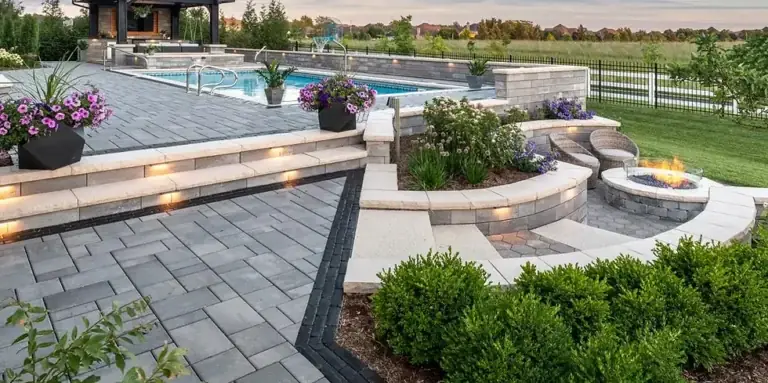
Compare Modern Water Features: Master Engineering & Design Guide
Contemporary landscape architecture relies heavily on fluid dynamics to anchor large residential compounds. Furthermore, integrating dynamic water elements requires balancing structural civil engineering with refined aesthetic restraint. When property developments scale across multi-acre estates, aquatic installations demand rigorous hydraulic planning. Specifically, engineers must manage subterranean vault sizing, electrical load distribution, and automated chemical sanitization across complex site geometries.
Achieving structural mastery across premium aquatic installations demands looking far beyond surface splashing. An exceptional outdoor water design coordinates micro-climate humidity, acoustic masking, and thermal evaporation rates into a unified plan. Consequently, every weir edge, basin depth, and pump configuration interacts directly with regional water restrictions and long-term maintenance realities. Hence, these elements determine how the property functions through successive environmental cycles.
Navigating this domain requires a rigorous evaluation of mechanical systems, structural mechanics, and material science. Discerning stakeholders focus on hydraulic efficiency, acoustic resonance, and structural permanence rather than fleeting stylistic trends. When project managers evaluate system configurations, choosing to compare modern water features ensures structural permanence, environmental harmony, and enduring architectural value.
Understanding “compare modern water features”
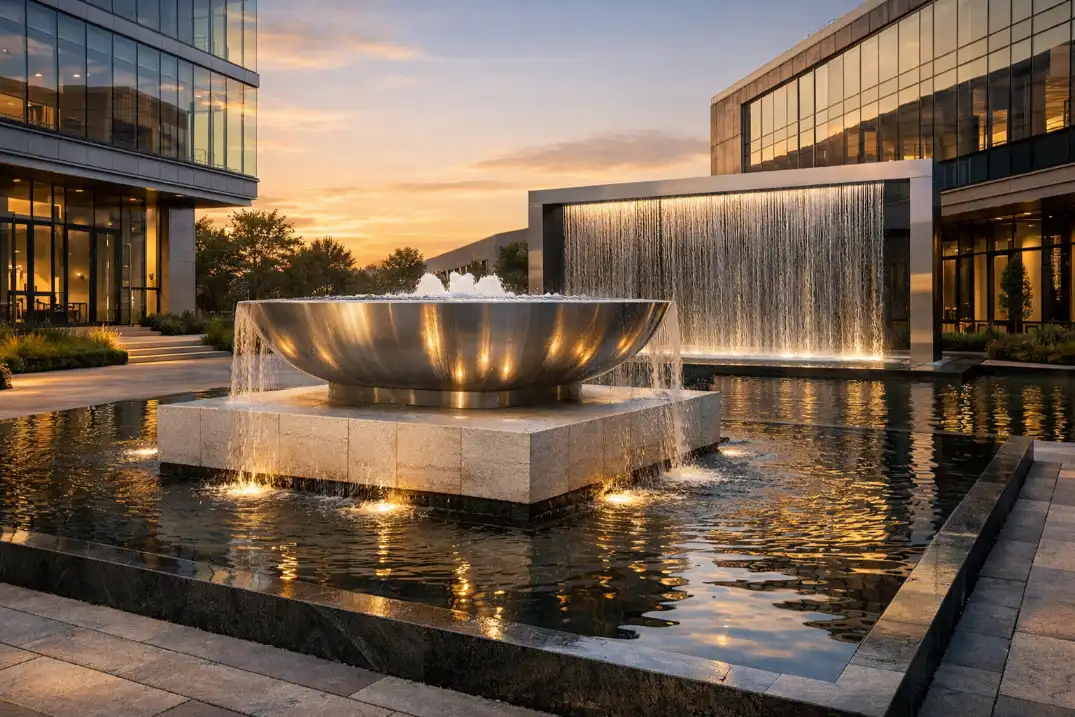
The process to compare modern water features requires looking past surface finishes to analyze pump turnover rates, variable-speed frequency drives, subsurface reservoir capacities, and the trade-offs between weir designs. These installation systems are engineered to circulate thousands of gallons silently while harmonizing with surrounding architecture and navigating severe local building codes.
A frequent misunderstanding in high-end aquatic design is equating high equipment cost with absolute operational reliability. Property owners frequently assume that importing exotic stone basins and high-output pumps guarantees a trouble-free installation. In practice, true aquatic mastery emerges from balancing flow velocity with weir length, ensuring water sheets break cleanly without wind displacement or splashing outside the collection basin.
Oversimplification risks occur when project evaluations focus strictly on initial visual impact rather than foundational plumbing engineering. For example, an expensive architectural pool or disappearing edge fountain built without proper sub-grade vault drainage will invariably suffer mechanical failure during heavy storms. Furthermore, treating aquatic installations as static elements ignores biological realities, as algae blooms, mineral scaling, and evaporation alter water chemistry daily. Therefore, sophisticated evaluations account for long-term operational dynamics, ensuring the system matures gracefully over time.
Deep Contextual Background
The evolution of architectural water installations reflects centuries of technological advancement, municipal engineering innovations, and shifting stylistic philosophies. Historically, elite compounds relied on gravity-fed Roman aqueducts and Baroque cascade systems. Consequently, hydraulic pressure was achieved purely through elevation drops and sheer structural mass. These traditional methods prioritized monumental stone fountains and theatrical water displays that celebrated human dominance over natural water supplies.
During the nineteenth and twentieth centuries, industrialization introduced submersible electric pumps, synthetic waterproof liners, and automated filtration technology. These innovations transformed site engineering. Specifically, they allowed architects to design zero-edge reflecting pools, bubbling scuppers, and cantilevered water walls that defied traditional gravity limits. This industrial shift established the foundation for contemporary landscape engineering, where heavy civil infrastructure merges seamlessly with luxury architectural finishes.
Today, contemporary master planning incorporates IoT-driven chemical dosing systems, ultra-violet sterilization units, and variable-frequency water pumps. This historical progression shifts the designer’s role from a simple fountain decorator to an aquatic engineer. Consequently, they orchestrate hydraulic physics, electrical safety, and water conservation into a unified, permanent landscape installation.
Conceptual Frameworks and Mental Models
Navigating the complexities of heavy aquatic engineering and site development requires structured mental models. These models balance fluid dynamics, structural physics, and long-term durability.
-
The Hydraulic Turnover Matrix: This framework evaluates pump sizing through a circulation lens. Specifically, it cross-references total water volume, filtration capacity, and UV sterilization rates to maintain absolute water clarity.
-
The Acoustic Masking Model: This analyzes how water frequency and turbulence interact with ambient environmental noise. Thus, it matches weir heights and drop designs with specific property boundaries to block unwanted sound.
-
The Evaporative Loss Continuum: This models how temperature swings and wind velocity cause water to evaporate from open basins, dictating the necessity of automated auto-fill lines and level sensors.
-
The Closed-Loop Hydro-Isolation Framework: This maps water movement through underground vaults, balancing reservoirs, and surface basins. Furthermore, it utilizes check valves and anti-siphon loops to prevent catastrophic de-priming.
Key Categories or Variations
Luxury property design incorporates several distinct water feature categories. Each category is defined by hydraulic mechanics, installation complexity, and long-term maintenance requirements.
| Water Feature Category | Primary Mechanical Focus | Core Architectural Impact | Key Operational Trade-Offs |
| Zero-Edge Reflecting Pools | Precision weir leveling, subsurface balancing reservoirs | Absolute architectural minimalism, mirror-like stillness | High evaporation rate, requires constant surface skimming |
| Cantilevered Water Walls | High-pressure vertical distribution manifolds | Dramatic vertical scale, soothing acoustic white noise | Prone to wind drift, requires frequent nozzle un-clogging |
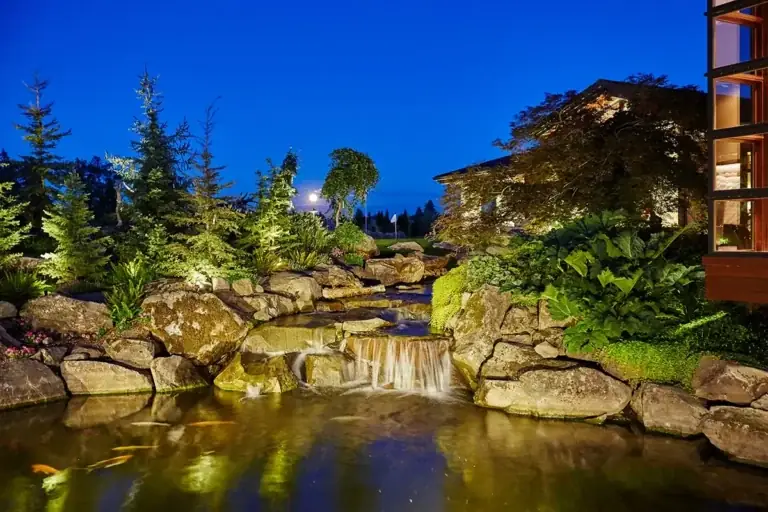
| Pondless Boulder Cascades | Subterranean gravel-filled basins, submersible pumps | Naturalistic acoustic integration, high wildlife attraction | Requires periodic sediment flushing from rock interstices |
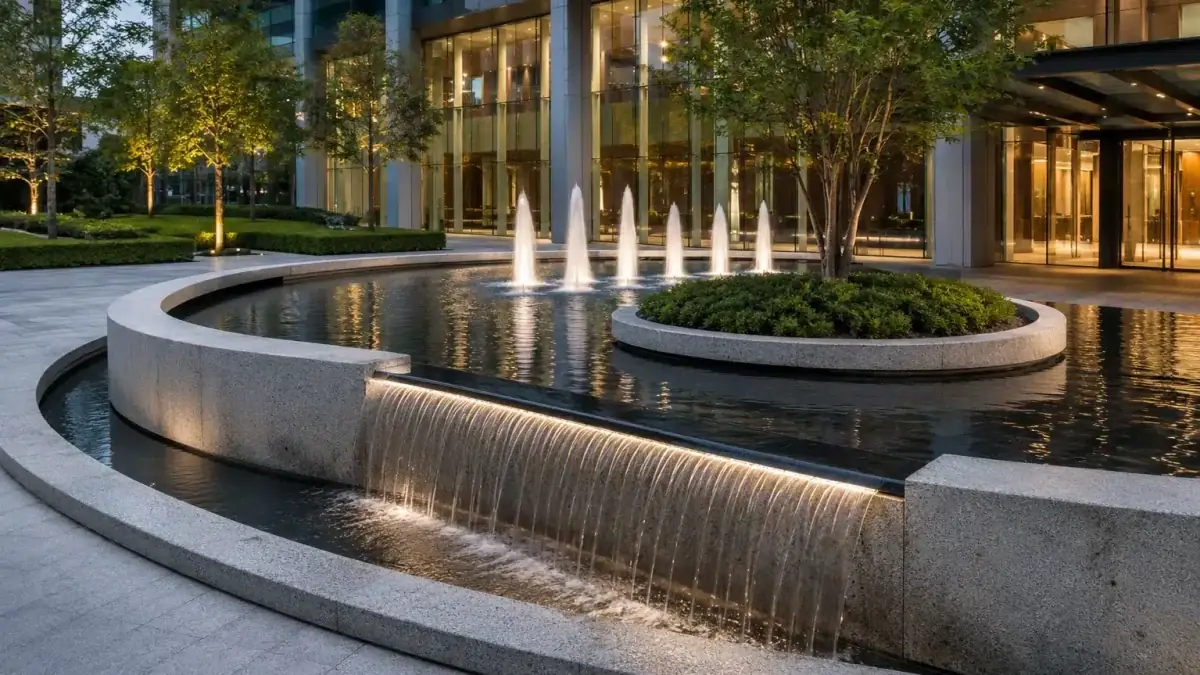
| Infinity Edge Spillways | Collector trough engineering, surge tank balancing | Seamless visual extension into landscape horizons | Sensitive to wind shear and micro-settlement shifts |
| Architectural Scupper Arrays | Linear stainless steel or bronze flow channels | Geometric rhythm, crisp geometric water arcs | Susceptible to mineral scaling and uneven flow distribution |
| Sub-Grade Rill Systems | Linear trench hydraulics, multi-zone valving | Spatial directionality, acoustic linear dampening | Complex subsurface waterproofing and clean-out access needed |
Realistic Decision Logic
When developers evaluate how to compare modern water features, selection depends on three immutable factors. First, they analyze regional evaporation rates and water availability. Second, they evaluate acoustic requirements relative to neighboring properties. Finally, they consider the architectural vernacular of the primary structure. For instance, a windy coastal site requires sheltered rills or low reflecting pools rather than high-splashing vertical walls.
Detailed Real-World Scenarios
A : The Windy Coastal Promontory
-
Constraints: High ambient wind speeds, corrosive salt air, and strict municipal water conservation limits.
-
Decision Points: Specifying low-profile reflecting pools with wide perimeter collection trays; installing wind-speed sensors that automatically throttle pump velocity during gusts.
-
Failure Modes: Wind blowing water completely outside the basin, draining the vault and burning out submersible pumps.
-
Second-Order Effects: Wind-speed sensors successfully protect pump motors. However, they reduce acoustic masking during high-wind storms when background noise is highest.
B : The Urban Courtyard Sanctuary
-
Constraints: Confined acoustic boundaries, strict structural weight limits over subterranean parking, and high ambient dust levels.
-
Decision Points: Installing a self-contained stainless steel wall fountain with an integrated high-efficiency cartridge filter and auto-dosers.
-
Failure Modes: Urban particulate clogging micro-scuppers; pump motor hum echoing off masonry courtyard walls.
-
Second-Order Effects: Integrated cartridge filters keep water crystal clear in dusty environments. However, they require weekly manual filter element washing to maintain flow rates.
C : The Expansive Country Estate Cascade
-
Constraints: Long electrical runs from the main manor, heavy organic debris loading from surrounding deciduous trees, and freezing winters.
-
Decision Points: Deploying heavy-duty commercial-grade variable speed pumps housed in a heated subterranean vault; installing heavy-duty skimmer baskets and winter blow-out lines.
-
Failure Modes: Tree leaves overwhelming surface skimmers, causing cavitation in primary intake lines; winter freeze-cracking of exposed copper manifolds.
-
Second-Order Effects: Commercial-grade vaults provide secure access for maintenance. However, they require careful sump drainage design to prevent ground-water flooding during spring thaws.
Planning, Cost, and Resource Dynamics
Executing complex aquatic installations across large estates requires balancing steep initial capital expenditures with long-term utility costs. The financial structure of elite site construction extends well beyond raw material procurement.
-
Direct Costs: Architectural concrete vault construction, high-grade waterproofing membranes, variable-frequency pumps, copper or stainless steel manifolds, and specialized stonemasonry.
-
Indirect Costs: Electrical sub-panel installations, municipal backflow preventer certifications, water meter permits, and contractor warranty maintenance agreements.
-
Opportunity Costs: Allocating valuable sub-grade real estate to massive balancing reservoirs instead of utility lines or planting beds.
-
Variability Factors: Unforeseen subterranean bedrock encounters during vault excavation. Furthermore, fluctuating electricity costs impact long-term operational budgets.
Financial and Resource Allocation Range
| Project Tier | Typical Budget Allocation (%) | Primary Capital Focus | Long-Term Resource Profile |
| Subsurface Vaults & Hydraulics | 40% – 50% | Excavation, concrete vaults, plumbing manifolds, pumps | Low visible maintenance, critical for system survival |
| Waterproofing & Basin Liners | 15% – 25% | Multi-layer elastomeric membranes, stainless steel pans | Zero maintenance unless compromised, high repair cost |
| Architectural Stone & Masonry | 20% – 30% | Custom coping, weir stones, decorative cladding | Low ongoing maintenance, high aesthetic longevity |
| Filtration & Automation Tech | 10% – 15% | UV sterilizers, auto-fill valves, chemical controllers | Moderate maintenance, periodic hardware replacement |
Tools, Strategies, and Support Systems
Realizing elite water feature installations on demanding sites relies on an ecosystem of specialized machinery, digital modeling tools, and expert advisory networks.
-
Computational Fluid Dynamics (CFD) Software: Utilized to digitally map water velocity, turbulence, and splash trajectories across custom weir designs before physical construction begins.
-
Laser-Guided Weir Leveling Instruments: Essential for establishing absolute horizontal precision across stone weir edges to ensure even water sheets.
-
Variable-Frequency Drive (VFD) Controllers: Electronic control units designed to precisely modulate pump motor speeds, reducing energy consumption and acoustic output.
-
Ultrasonic Flow Meters: Non-invasive diagnostic tools used to measure exact water volume movement through primary supply and return lines.
-
Digital Water Chemistry Monitors: IoT-enabled sensors that track pH, ORP (oxidation-reduction potential), and total dissolved solids in real time, triggering automated chemical injectors.
-
Heavy Crane Mobilization Fleet: Used to position massive pre-cast concrete vaults and monolithic stone water basins into deep estate excavations.
-
Commercial Pool and Fountain Consultancies: Retained to engineer complex sanitation systems and ensure compliance with public safety health codes when applicable.
Risk Landscape and Failure Modes
Sophisticated water feature projects carry distinct structural and operational risks that can compromise asset value if teams fail to manage them actively.
-
Catastrophic Sub-Grade Leaks: Micro-cracks in concrete vaults or failing waterproofing membranes leading to thousands of gallons of undetected water loss into surrounding soil.
-
Pump Cavitation and Burnout: Restricted intake lines caused by debris accumulation, starving the pump impeller of water and causing catastrophic thermal failure.
-
Biological Fouling: Inadequate UV sterilization or chemical dosing allowing algae and biofilm growth to slick basin floors and clog fine filtration membranes.
-
Electrical Ground Faults: Submersible pump wiring degradation triggering ground-fault circuit interrupters, shutting down the entire water feature during peak operating hours.
-
Freeze-Thaw Expansion Damage: Trapped water expanding within rigid plumbing lines or stone vessels during deep winter freezes, causing immediate structural rupture.
Governance, Maintenance, and Long-Term Adaptation
A luxury water feature installation represents an active mechanical asset that requires structured governance to preserve its operational safety and aesthetic standard. Transitioning from construction to ongoing site stewardship demands disciplined oversight.
-
Monitoring Protocols: Weekly water chemistry assays, monthly flow rate evaluations, and quarterly electrical current draws on primary pump motors.
-
Review Cycles: Comprehensive engineering walkthroughs conducted annually to evaluate vault waterproofing integrity, valve actuation, and lighting fixture seals.
-
Adjustment Triggers: Pre-established intervention thresholds. Specifically, servicing filtration systems when pressure differentials exceed manufacturer recommendations by ten psi.
-
Layered Maintenance Checklist:
-
Weekly: Skimming surface debris, checking auto-fill float operation, and scrubbing waterline calcium deposits.
-
Monthly: Cleaning filter cartridges, testing UV lamp intensity, and inspecting balancing reservoir water levels.
-
Annually: Complete system drain-down, deep basin pressure washing, check-valve inspection, and winterization procedures.
-
Measurement, Tracking, and Evaluation
Evaluating the performance of an elite water feature investment requires both quantitative engineering metrics and qualitative architectural assessments.
-
Leading Indicators: Water clarity turbidity measurements, chemical dosing frequency logs, and pump motor electrical efficiency ratings.
-
Lagging Indicators: Total absence of water loss anomalies over a twelve-month billing cycle and zero structural cracking across weir edges.
-
Qualitative Signals: Desired acoustic white noise propagation across outdoor entertainment rooms and mirror-flat surface reflectivity during calm mornings.
-
Documentation Examples:
-
The Hydraulic Performance Log: A digital record of pump flow rates, pressure differentials, and maintenance interventions.
-
The Water Chemistry Ledger: Chronological records tracking pH adjustments, sanitizer levels, and seasonal water usage volumes.
-
The Electrical Audit: Annual reports detailing motor load stability and energy consumption metrics for all variable-speed pumps.
-
Common Misconceptions and Oversimplifications
-
Myth: Modern water features require zero daily maintenance if equipped with advanced filtration.
-
Correction: Even automated systems require debris removal from skimmers, water level monitoring, and periodic chemical adjustments.
-
-
Myth: Larger pumps always produce better visual and acoustic effects.
-
Correction: Oversized pumps cause turbulent splashing, noise pollution, and excessive energy consumption if not matched to weir capacity.
-
-
Myth: Waterproofing concrete basins is a one-time application process.
-
Correction: Elastomeric membranes and sealants degrade under UV exposure and ground movement, requiring periodic renewal.
-
-
Myth: Pondless water features eliminate the need for winterization in cold climates.
-
Correction: Submersible pumps and exposed plumbing lines in gravel basins still require draining or winter protection to prevent freezing.
-
-
Myth: Rainwater collected on-site can be pumped directly through architectural nozzles without filtration.
-
Correction: Unfiltered organic debris and silt will immediately clog precision scuppers and stain delicate stone basins.
-
-
Myth: Underwater LED lighting fixtures last indefinitely without maintenance.
-
Correction: Submersible light seals and drivers suffer from thermal cycling and require periodic replacement.
-
-
Myth: Water features have a negligible impact on a property’s overall utility consumption.
-
Correction: Continuous evaporation and pump operation represent significant long-term water and electricity expenses.
-
-
Myth: Structural vaults can be placed over uncompacted soil fill if reinforced with rebar.
-
Correction: Soil settling beneath heavy concrete vaults causes severe structural shear and catastrophic plumbing leaks.
-
Ethical, Practical, and Contextual Considerations
Designing and constructing high-end water features carries significant environmental responsibilities. Specifically, continuous evaporation in arid climates places a heavy burden on regional municipal water supplies and local aquifers. Furthermore, inefficient pump systems consume large amounts of electrical energy, contributing to indirect carbon emissions. Therefore, responsible estate planning mandates integrating high-efficiency variable-speed pumps, closed-loop rainwater harvesting systems, and automated shut-off sensors during high wind or drought conditions. Balancing aquatic luxury with ecological stewardship ensures that grand estate water installations enhance the property without depleting regional natural resources.
Conclusion
The realization of sophisticated outdoor water features depends entirely on hydraulic engineering discipline, mechanical foresight, and structural precision. Surface aesthetics alone cannot support the complex demands of large-scale aquatic installations. By grounding design in rigorous plumbing physics, advanced filtration technology, and structured maintenance frameworks, property owners establish water features that endure across decades. Ultimately, when decision-makers thoroughly evaluate modern water installation options before construction begins, they ensure their projects achieve long-term operational resilience, acoustic harmony, and lasting architectural value.